Security | Threat Detection | Cyberattacks | DevSecOps | Compliance

Ensuring Cybersecurity Compliance: Navigating CMMC Assessment and Affirmation Requirements

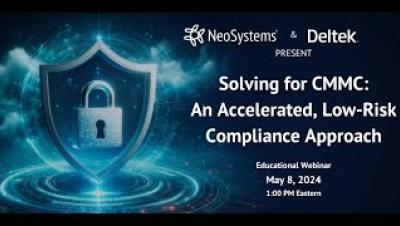
For defense contractors, cybersecurity is a non-negotiable priority. The Cybersecurity Maturity Model Certification (CMMC) program outlines rigorous assessment and affirmation requirements for contractors and subcontractors. Let’s dive into the key elements that shape this crucial aspect of CMMC compliance.

CMMC 2.0: Your Questions Answered

By now, you are likely aware that the Cybersecurity Maturity Model Certification (CMMC) Program Proposed Rule was published in the Federal Register on December 26, 2023. This set into motion a series of deadlines, which will culminate in the full implementation of CMMC 2.0. It also set into motion a flurry of activity within the Defense Industrial Base (DIB) and the realization that a deadline for compliance looms large.

Making Sense of the SEC's New Rules for Cybersecurity Risk and Disclosure (Part I)

As the digital age unfolds, we continue to see seismic increases — decade-to-decade, year-to-year, and even month-to-month — in the amount of data we create as well as its value to us, both individually and collectively. From medical records, financial statements, and classified government documents to transactional processing systems, customer information, social media engagements, pictures of our pets, and so much more, data is the lifeblood of modern society.

Planning with Purpose: 10 Tips to Develop Your Year-Long Security and Compliance Training Program

Our team at KnowBe4 recently got together to talk about planning for annual security and compliance training. You might be thinking, “Aren’t you a little late in planning for the year? It’s March already...” We are actually talking about 2025. Not everyone trains millions of learners all around the world like we do, so your planning for compliance and security training might be on a different timescale.

Meet EO 14028 requirements with Datadog Log Management, Cloud Workload Security, and Cloud SIEM

As of August 2023, only 3 out of 23 US government agencies were compliant with Office of Management and Budget (OMB) requirements for log management and security observability. These requirements are outlined in M-21-31, a 2021 memorandum that was issued following Executive Order 14028 on improving national cybersecurity. Until all of these agencies implement the new requirements, the federal government’s ability to fully detect, investigate, and remediate cybersecurity threats will be constrained.

FAQ: What Are the DoD Requirements for Wiping Data?

In today’s digital age, destroying data is not as easy as it once was. Before the advent of computers, if you needed to destroy sensitive government information to prevent it from falling into the wrong hands, all you often needed to do was light some papers on fire. With computers, you might think that it’s a simple matter. After all, if you’ve ever accidentally deleted a file or had a hard disk crash, you’ve probably lost data and haven’t been able to recover it.

5 ways Vanta customers saved time and money automating their SOC 2

SOC 2 is a popular compliance framework used to evaluate and validate an organization’s information security practices. By getting a SOC 2 report, you’ll be able to develop a trusting relationship with your customers, unlock new revenue opportunities, and build a strong security posture. ‍ The process of getting your SOC 2 often takes significant time, effort, and resources.

PCI DSS Requirement 8 - Changes from v3.2.1 to v4.0 Explained

In our ongoing series of articles on the Payment Card Industry Data Security Standard (PCI DSS), we’ve been examining each requirement in detail. Today, we turn our attention to Requirement 8: Identify Users and Authenticate Access to System Components. This requirement is built on two fundamental principles User identification and authentication,1) identifying individuals or processes on a system and 2) verifying their authenticity.

What is Compliance Automation

In recent years almost every company has been utilizing technological solutions like artificial intelligence which has given rise to the importance of Compliance automation. It is a practice to protect the sensitive information of the companies. Hence, Compliance automation software keeps track of the company’s internal systems. Businesses process automation to achieve the main goals of the organizations effectively with the least amount of monitoring.