Security | Threat Detection | Cyberattacks | DevSecOps | Compliance

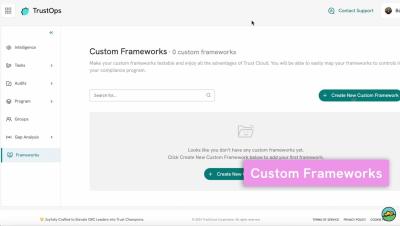
Custom Frameworks

TrustCloud supports several standards and frameworks out of the box, including SOC 2, CMMC, and ISO 9001, to name a few. The best part is that TrustCloud is constantly adding new frameworks to expand the TrustCloud Common Control Framework (TCCCF). Organizations, regulations, and business needs are constantly evolving, and therefore, you might need certain frameworks that are currently not supported by the TrustCloud platform. To enable you to meet your ever-evolving framework needs, TrustCloud now offers the flexibility of creating your own custom frameworks and standards.
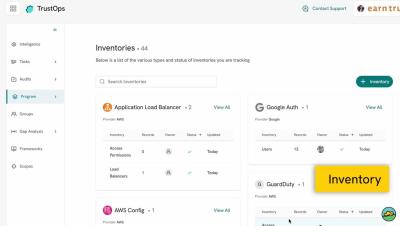
Inventory - What is it? How can you use it as evidence?

An inventory is a specific list of data that is gathered to provide information about a certain part of the business. The inventory is inspected by an automated test or by a human to determine if one or more controls are satisfied and to analyze the results of the inventory. Examples of inventories are users, security incidents, devices, servers, databases, logs, etc.

SBOM Attestation by 3PAOs: Everything You Need to Know

In the past, we’ve written a lot about FedRAMP certification and the way the Ignyte platform can help you with record-keeping and the overall process. We’ve largely glossed over the role that the third-party assessment organization plays, hand-waving it as a relationship you build between your chosen 3PAO and your own organization. As a certified 3PAO, however, we do have a unique insight into this process.

TrustCloud Product Updates: June 2024

Expanded support for multi business units, locations, and products. With multiple segments support across TrustCloud, you can develop and visualize your GRC requirements across business units, locations, and products. You can segment responsibilities and determine hierarchical impact through transparent parent-child relationships.

How 360 Cameras Usher in a New Era of Trucking Safety

In the ever-growing transportation field, driver and fleet protection remains paramount. The trucking industry is constantly seeking ways to mitigate risks and ensure the well-being of drivers, passengers, and fellow road users. There were 13.86 million single-unit and combination trucks registered in 2021, as per the American Trucking Association. It represents 5% of all motor vehicles registered.
Featured Post

Six steps to protecting data in financial services companies

There is no shortage of news headlines about companies falling victim to cyber breaches and the astounding costs associated with them. According to the IBM Cost of a Data Breach Report 2023, the global average cost of a data breach in 2023 was $4.45 million, a 15% increase since 2020. For the financial services industry, the cost is even higher at $5.9 million per breach; that is 28% above the global average.

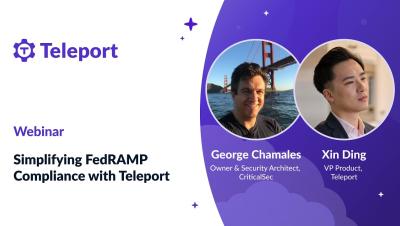
Simplifying FedRAMP Compliance with Teleport

FedRAMP compliance is notoriously challenging, but it doesn't have to derail your DevOps flow or tech stack. Discover how Teleport’s robust infrastructure access and security platform addresses some of the toughest questions and hurdles in the FedRAMP process, empowering engineering, compliance, and security leaders to implement and enforce security controls seamlessly.

Data Blizzard Hits LA Schools: Students data stolen in Snowflake Hack

In a recent development that has raised concerns across the education sector, Los Angeles Unified School District (LAUSD) has confirmed a significant data breach involving student information. The breach, linked to a hack of the district’s Snowflake account, has exposed sensitive data pertaining to students and employees enrolled in the sprawling district. Snowflake is a cloud database platform used by companies worldwide to store their data.

Cybersecurity's Next Frontier: SEC's Game Plan for a More Secure Financial World

In 2023 alone, there were over 3,200 reported cyberattacks, with over 350 million victims in the United States. That’s not to mention the undetected or failed attacks by these cybercriminals, both external and internal, to get access to sensitive data and customers’ Personal Identifiable Information (PII).