Security | Threat Detection | Cyberattacks | DevSecOps | Compliance

How to Manage Risk Effectively in Cloud-Native Environments

We’ve all got our heads in the cloud, or if not yet, we’re well on our way there. In other words, the process of digital transformation is happening at such a pace that almost all organizations will soon be working in the cloud and using cloud-native technology. Analyst Gartner has predicted that by 2025, over 95% of new digital workloads will be deployed on cloud-native platforms. This represents a 30% growth from 2021.

Building a Modern Application Security Strategy. Part One: Threats, Opportunities, and Challenges

First of a two-part series The online world is now packed with applications, so it’s unsurprising that they’re a top target for threat actors. However, traditional application security (AppSec) strategies often prove ineffective. To defend themselves against the rapidly evolving threat landscape, organizations need to build a modern AppSec strategy that addresses these fast-changing conditions.

Automating Kubernetes Backups with CloudCasa REST APIs

For power users who want to run their scripts from the command line or use workflow automation tools to provision their environments, watch this short tutorial on how to use the CloudCasa REST API to manage Kubernetes backups. The tutorial goes through an example of executing a CloudCasa backup job through the REST API, which requires tasks such as querying for backup job ids and invoking an action against that job through an http request.

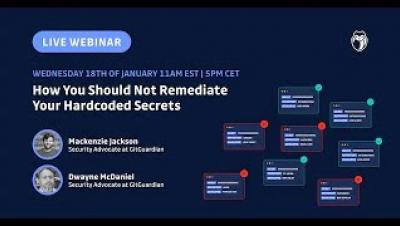
[Webinar] How You Should Not Remediate Your Hardcoded Secrets

If you have ever run a secrets scanner against your entire codebase, it has likely raised hundreds if not thousands of findings, leaving you wondering, "Where should I start?" Unlike other vulnerabilities, hardcoded secrets represent a threat by themselves whether your code is running or not. Attackers with access to a repository will scan it inside out for secrets, turning every occurrence into a risk you cannot ignore. Still, this does not mean that you should treat all incidents equally!

Domain member: Digitally encrypt secure channel data

Digitally Encrypt Secure Channel Data is a security setting used for digitally securing the data that’s transmitted over the secure data channel network. The data transmitted between the domain member and the domain controller must be encrypted and secured with the latest technology to ensure that no unauthorized user gets access to the confidential data.
Sponsored Post

The Life of the Sysadmin: A Patch Tuesday Story

The System Administrator! AKA the Sysadmin. The keeper of the network, computers – well basically all things technology. The one who is hated for imposing complex passwords and other restrictions, but taken for granted when everything works well. They are the first to be called when “facebuuk.com” reports: “domain does not exist”.

Accelerated Cloud Adoption, Digital Transformation, and More Cyber Resiliency In 2023

In this episode of 2023 Predictions, Sathya Sankaran, General Manager of CloudCasa by Catalogic, speaks with Swapnil Bhartiya on his insights into where he sees the industry heading in 2023. The pandemic resulted in the acceleration of cloud adoption and digital transformation and Sathya expects this momentum to continue in 2023 as well.