Security | Threat Detection | Cyberattacks | DevSecOps | Compliance

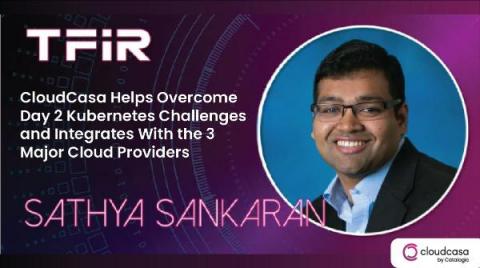
Navigating the Challenges of Cross-Cluster Migration of Kubernetes Workloads with CloudCasa

Cross-cluster migration of Kubernetes workloads continues to be challenging since workloads are isolated from each other by design. There are several reasons why you may want to separate your workloads, whether it is to reduce complexity or to have the cluster closer to the user base. However, this can be complex as Kubernetes has many components.

How To Put Cloud Nimble to Work to Shift Left Security

Shifting security left means preventing developers from using unacceptably vulnerable software supply chain components as early as possible: before their first build. By helping assure that no build is ever created using packages with known vulnerabilities, this saves substantial remediation costs in advance. Some JFrog customers restrict the use of open source software (OSS) packages to only those that have been screened and approved by their security team.

Secure Amazon EKS Access with Teleport

Enterprises are embracing the cloud native paradigm for agility, scalability, composability, and portability. Kubernetes, the open source container orchestration engine, is the foundation of modern, cloud native workloads. AWS customers can leverage managed Kubernetes available in the form of Amazon Elastic Kubernetes Service (EKS) or deploy a cluster based on upstream Kubernetes distribution running in a set of Amazon EC2 instances.

Terraform security best practices (2022)

This article provides a breakdown of the most important Terraform security best practices to consider when implementing an Infrastructure as Code (IaC) environment. Terraform is a highly popular IaC tool offering multi-cloud support. IaC means that infrastructure is deployed automatically and configured at scale, which has immediate benefits for efficiency and consistency.

How to Conquer Remote Code Execution (RCE) in npm

Recently, there have been some remote code execution (RCE) attacks that included just a single line of well-built code that can run a remote shell. Let’s take a look at why and how these attacks work, why npm is particularly susceptible, what could happen if they get into machines, and how to detect and fix them.

Trustless Infrastructure: Securing Critical Assets with Teleport

The global pandemic and push for remote work are putting companies’ IT infrastructures at greater risk than before. This risk grows as infrastructure is scaled, and more people gain access to highly sensitive data, such as access keys to a valuable password vault. Another vulnerability is the use of passwords since they can also be compromised. To overcome these risks and protect critical infrastructure, the implementation of a zero-trust access solution is needed. But how can we accomplish that without slowing down engineers or adding administrative overhead?

Three Big Myths About Application Testing With SAST Tools

Static Application Security Testing (SAST) is one of the principal techniques for assessing the source code of applications to detect possible vulnerabilities. SAST enhances application security during the early stages of the development life cycle and plays an important role in shifting security left. However, there are quite a few myths that are often associated with implementing SAST security tools. Let’s run through the big three.

Teleport Demo - 30 Minute Overview

0:00 Intro

1:00 Architecture Overview

3:00 Single Sign On Integration

5:00 Teleport Server Access

7:00 tsh and session recordings

9:00 Teleport App Access

11:00 RBAC Mapping

12:05 Teleport K8s Access

15:00 Teleport DB Access

18:00 Teleport RDP Access

22:00 Access Requests

24:00 Teleport Slackbot

26:00 Active Session Joining
27:00: Trusted Clusters

28:00 Open Source vs Enterprise

How to Deploy Pods in Kubernetes?

Kubernetes leverages various deployment objects to simplify the provisioning of resources and configuration of workloads running in containers. These objects include ReplicaSets, lSets, Sets, and Deployments. A pod is the smallest deployment unit in Kubernetes that usually represents one instance of the containerized application.