Static Application Security Testing (SAST) is one of the principal techniques for assessing the source code of applications to detect possible vulnerabilities. SAST enhances application security during the early stages of the development life cycle and plays an important role in shifting security left. However, there are quite a few myths that are often associated with implementing SAST security tools. Let’s run through the big three.
X11 forwarding, ssh -X, is an SSH protocol that enables users to run graphical applications on a remote server and interact with them using their local display and I/O devices. It is commonly relied upon by developers for securely interacting with remote machines across wide and heterogeneous server fleets.
0:00 Intro
1:00 Architecture Overview
3:00 Single Sign On Integration
5:00 Teleport Server Access
7:00 tsh and session recordings
9:00 Teleport App Access
11:00 RBAC Mapping
12:05 Teleport K8s Access
15:00 Teleport DB Access
18:00 Teleport RDP Access
22:00 Access Requests
24:00 Teleport Slackbot
26:00 Active Session Joining
27:00: Trusted Clusters
28:00 Open Source vs Enterprise
The JFrog DevOps Platform is your mission-critical tool for your software development pipelines. The results of key binary management events in Artifactory, Xray, and Distribution can reveal whether or not your software pipelines are on-track to deliver production-quality releases.
Kubescape is a Kubernetes open-source platform providing a multi-cloud K8s single pane of glass, including risk analysis, security compliance, RBAC visualizer, and image vulnerabilities scanning.
What are cloud-native applications? According to the Cloud Native Computing Foundation (CNCF), the term “cloud native” describes systems that are specifically designed to help build and run scalable applications in all cloud environments, including public, private, and hybrid clouds. Cloud-native applications use the attributes of cloud architecture in ways that legacy systems can’t. They don’t need any onsite computing infrastructure and can scale quickly to meet demand.
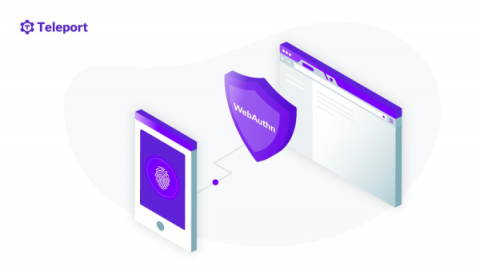
The WebAuthentication API, or WebAuthn, facilitates secure authentication based on public-key credentials. The idea of passwordless and public-key authentication is not new, but the compatibility and interoperability of various elements in the authentication process were always weak. WebAuthn API aims to solve that problem by bringing the uniform authentication API into web browsers.
Network automation has many benefits for organizations adopting a DevOps model for managing their infrastructure, including speed, agility, and a consistent change control process. However, with improvements in speed, there comes an added risk of configuration errors rapidly propagating through the network. To safeguard against potential mistakes, network and security verification become an essential part of the network DevOps lifecycle.