Security | Threat Detection | Cyberattacks | DevSecOps | Compliance


Teleport 6.2
The team recently released Teleport 6.2. This post will walk you through some of the new features and additions included in this release. This release has a few breaking changes. If you’re currently running Teleport on AWS using DynamoDB, we would advise waiting for 6.2.1 before upgrading.
Signed Pipelines Build Trust in your Software Supply Chain
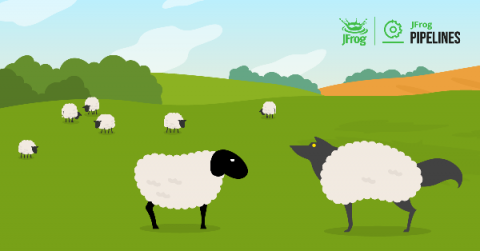
Trust isn’t given, it’s earned. As the Russian proverb advises, Доверяй, но проверяй — or as U.S. President Ronald Reagan liked to repeat, “Trust, but verify.” We designed JFrog Pipelines to securely support a large number of teams, applications, users and thousands of pipelines.

Snyk uncovers supply chain security vulnerabilities in Visual Studio Code extensions
We have been witnessing an ever growing amount of supply chain security incidents in the wild. Everything from open source package managers security flaws being exploited to continuous integration systems being compromised to software artifacts being backdoored. And now, those incidents are starting to extend to the place where developers spend most of their time: their integrated development environment, and specifically the Visual Studio Code IDE.

Deep dive into Visual Studio Code extension security vulnerabilities
To stay ahead of attackers, we constantly monitor various security threats. One of these threats — supply chain attacks — aims to compromise an organization through its software development process. Recently, a huge spike in supply chain attacks was observed — dependency confusion was discovered, the SolarWinds breach was reported and more malicious packages were flagged. This certainly drew our attention (as well as the rest of the world’s)!

Securing Open Source Infrastructure
Open Source software provides the community source code that anyone can inspect, modify, and enhance. OSS is so ubiquitous that it’s even on other planets. This post is for the people who run these projects.

Snyk takes on responsibility for Node.js ecosystem vulnerability disclosure program
As announced last week by our good friends at the Node.js Foundation, Snyk has agreed to take over from the amazing Node.js ecosystem vulnerability disclosure program. As a company that’s been part of this program from a very early stage — and has been inspired by it to create our own multi-ecosystem disclosure program — it is a great honor to have been entrusted with this responsibility, and we thank the Node.js Foundation sincerely for their trust in this matter.
Harnessing security expertise to power SAST and Code Security

Introducing Snyk Preview: Early access to Snyk features
In 2020, over 30 new major features were released across the Snyk platform — in Snyk Open Source, Snyk Container, Snyk Infrastructure as Code, and Snyk Code. While both our development and product teams deserve credit for Snyk’s rapid pace of development, our users also play an important role by continuously providing us with their feedback and insight. Our ultimate goal is to help development and security teams be successful in mitigating risk.