Security | Threat Detection | Cyberattacks | DevSecOps | Compliance

What is Generative AI Security? Types, Risks & Best Practices

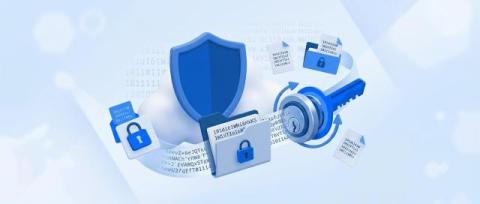
Generative AI security is the practice of protecting generative artificial intelligence models, applications, and their underlying training data from cyber attacks, data leakage, and unauthorized access. It focuses on securing both sides of the system—i.e., the AI itself (models, pipelines, APIs) and the sensitive data flowing into and out of it during real-world use.

Top 9 Single Sign-On Solutions for Enterprise Security in 2026

Cybercrime is costing the world $10.5 trillion in 2025, and it’s not going to get better any time soon. Cybercriminals are exploiting vulnerable access controls, making identity the new parameter for security breaches. This is creating hurdles for the enterprises in protecting user access across several devices, applications, and cloud infrastructures. Handling data for multiple users while maintaining a flawless user experience can be hectic for the IT teams.

Top MFA Providers in 2026: A Complete Guide

In 2026, the stakes around identity security are higher than ever, and choosing the right multi-factor authentication (MFA) provider can directly influence how resilient your organization is against modern attacks. Cybercriminals are increasingly bypassing weak or legacy authentication using phishing, credential stuffing, and social engineering, which makes static passwords alone effectively obsolete.

5 best GRC software solutions for enterprise teams in 2026

Accelerating security solutions for small businesses‍ Tagore offers strategic services to small businesses. A partnership that can scale‍ Tagore prioritized finding a managed compliance partner with an established product, dedicated support team, and rapid release rate. Standing out from competitors‍ Tagore's partnership with Vanta enhances its strategic focus and deepens client value, creating differentiation in a competitive market.

How to Detect and Prevent Lateral Movement Attacks

A few years ago, during a routine investigation after a phishing incident, the security team believed the damage was contained. During the attack, one employee’s laptop was compromised. The security team removed the malware and the password was reset. But the next morning, when analysts started reviewing authentication logs, something odd appeared. The same compromised account had logged into three internal servers overnight. Then a database server. Then a backup controller.

The firewall appliance is part of the problem. The legacy stack is all of it.

When static perimeters were a thing, networking and security vendors sold organizations products to fix an IT need or problem. That fix would expose a gap somewhere else, so the market named the gap, built a category around it, and organizations were sold another product to plug it. That model didn’t age well as environments changed.

EU AI Act Compliance Starts With Operationalizing AI Governance

The European Union's (EU) AI Act is the most consequential regulatory development in enterprise technology in years. For organizations deploying artificial intelligence at scale, which essentially includes all businesses nowadays, it introduces a formal, continuous obligation to demonstrate governance. The regulation has been in the public domain long enough that most organizations have a working understanding of what it requires.

How To Protect Your Rights When Injured On The Job

When you get hurt at work, confusion hits fast. Pain, lost wages, and pressure from your employer can leave you feeling cornered. You may worry about speaking up or filing a claim. You may fear losing your job. You are not alone. Workers across the country face the same struggle every day. This guide explains how to protect your rights when injured on the job. You will learn what to say, what to write down, and who to contact. You will see how to report your injury, seek medical care, and respond when someone questions your story. You will also find simple steps to guard your paycheck and your health.

How Rockford Car Accident Lawyers Prove Fault After a Collision

After a crash in Rockford, you may feel stunned, hurt, and angry. You also need answers. Who caused the collision. Who must pay for the damage. Rockford car accident lawyers build that proof step by step. They do not rely on guesses or quick stories. Instead, they pull police reports, speak with witnesses, read medical records, and study photos and video from the scene. Then they connect each piece to show how the crash happened and who was careless. This proof shapes everything. It affects insurance talks, medical bill payments, lost wage claims, and any lawsuit. Without strong proof, you risk blame that is not fair.

Exposure as a Competency: How Agentic Exposure Management Can Differentiate High-Performing Teams

In today's fast-paced work environment, the factors that distinguish high-performing teams go well beyond technical skills and traditional leadership. Increasingly, organizations are recognizing "exposure" as a critical competency, one that shapes how teams interact with uncertainty, opportunity, and risk. While exposure has historically been viewed through a financial or risk management lens, it is now emerging as a core driver of organizational agility, innovation, and resilience.