Security | Threat Detection | Cyberattacks | DevSecOps | Compliance

OpenAI Daybreak and the Future of Secure Software Development

OpenAI recently introduced Daybreak, a cybersecurity initiative designed to apply frontier AI models to vulnerability discovery, secure code analysis, and earlier remediation across the software lifecycle. By combining advanced reasoning and planning capabilities, Daybreak aims to help organizations identify and address weaknesses before they reach production. This is a meaningful step forward, but it is also a continuation of a long-standing approach.
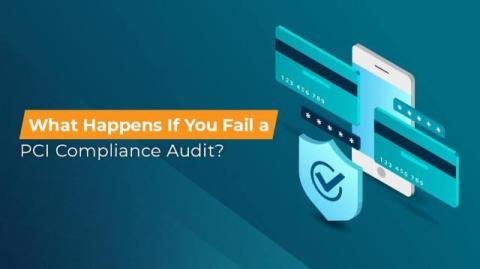
What Happens If You Fail a PCI Compliance Audit?

PCI DSS compliance is not something you can be flippant about. The Payment Card Industry Data Security Standard is a high bar, and it’s one that is effectively mandatory for any business that wants to accept credit card payments, no matter how little engagement with the systems you have. Any security standard is only as good as its enforcement. PCI strictly enforces its standards because it’s a core foundation of the trust people have in credit cards.

How to Measure the ROI of an Insider Risk Management Program

Security leaders don't struggle to justify the need for insider risk management (IRM). They struggle to justify the budget. When the CFO or board asks why you're spending seven figures on a program to monitor your own employees, "because insider threats are real" isn't enough. Cyberhaven data shows office-based employees are 77% more likely to exfiltrate sensitive data than remote workers, and that risk spikes further during offsite logins and workforce transitions.

What Is Passwordless Authentication? How It Works, Benefits, and Safety

Passwords have been the foundation of authentication for decades. But they have also become one of the biggest weaknesses in modern security. Users reuse them, attackers steal them, and organizations spend significant time managing them. As systems grow more complex and threats become more advanced, relying on passwords alone is no longer practical. This is where passwordless authentication comes in.

How to Move from Legacy to Customer Accounts in Shopify Without Disrupting Business Workflows

Shopify is deprecating Legacy Customer Accounts, and if your store relies on custom login flows, B2B approvals, or third-party integrations, the impact goes further than a login page redesign. While the platform move is mandatory, the priority for any merchant is maintaining continuity across logins, onboarding, and the connected systems that keep the business running. This guide walks you through the transition in a structured way.

Why Traditional PAM Is Failing in the Age of Machine Identities

For years, Privileged Access Management (PAM) was built around a simple assumption: privileged access is primarily a human problem. That assumption is rapidly collapsing. Modern enterprises are no longer driven mainly by administrators logging into servers. They are increasingly powered by APIs, containers, automation pipelines, microservices, cloud workloads, and AI-driven systems communicating continuously at machine speed.

What is shadow AI? And why GenAI usage monitoring matters for MSPs and SMDs

Author: Alexander Ivanyuk, Senior Director, Technology Generative AI is no longer a side experiment inside businesses. It is moving into normal work: writing, summarizing, coding, research, customer support, internal search and repeatable workflows. OpenAI says it now serves more than one million business customers, more than seven million ChatGPT workplace seats, and roughly 8x growth in weekly enterprise messages since November 2024.

What is AI penetration testing?

As organisations continue integrating AI capabilities into customer-facing applications, internal tooling, and operational workflows, the security implications of these systems are becoming increasingly important. Large Language Models (LLMs), AI assistants, and automated decision-making features are now appearing across SaaS platforms, support systems, and enterprise applications, often connected directly to sensitive data and business processes.

Why Active Directory vulnerabilities demand more than patching

A newly disclosed privilege-escalation flaw in Microsoft Active Directory Domain Services (AD DS) is a timely reminder that identity infrastructure continues to be one of the most consequential attack surfaces in any enterprise. CVE-2026-25177, rated HIGH with a CVSS score of 8.8, allows an authenticated domain user to escalate their privileges over the network without any elevated starting point or user interaction.