Security | Threat Detection | Cyberattacks | DevSecOps | Compliance

Django Vulnerabilities Expose Apps to SQL Injection and DoS Attacks

The Django Software Foundation has rolled out important security fixes addressing two serious vulnerabilities that could let attackers manipulate databases and disrupt application availability. The vulnerabilities such as CVE-2025-64459 (SQL Injection) and CVE-2025-64458 (Denial of Service), were found in commonly used functions of the Django web framework. These vulnerabilities affect how Django processes queries and handles redirects, especially when user-supplied input is not properly validated.


Password habits are worsening, but security leaders see a path to passwordless

Poorly managed credentials are among the most stubborn problems for security and IT teams, and authentication is one of the areas where the Access-Trust Gap is widest. But even as credential-based attacks remain a major threat to security, there are positive signs that companies are moving toward a passwordless future.

5 Security Red Flags to Watch When Working with Contractors

You monitor employees. You trust contractors. That’s the problem. Contractors have full system access, months to plan their exit, and minimal safeguards in place to stop them. They have the same access to your customer databases, pricing models, and intellectual property as your permanent staff. But unlike employees, they know exactly when they’re leaving—with months in advance to prepare.

How Are Cyber Security Companies Managing AI Attacks?

AI attacks pose real risks for companies because of their ability to scale and automate attacks like brute force attacks, smarter malware, deep fakes and advanced phishing. Attacks that were once slow, manual and easy to spot are now becoming faster, more sophisticated and harder to detect. UK government research shows that 32% of UK businesses have experienced a cyber attack in the last year, and experts warn that AI could make this number rise significantly.

Embracing the Future of Security With Cloud-Native SIEM

As technology and cyberthreats continue to evolve, businesses must adapt their IT infrastructure and security strategies to stay ahead of the curve. At the heart of this evolution is security information and event management (SIEM). However, if you’re still relying on a traditional SIEM, you’re likely struggling to keep up.

Finding the Perfect Fit: Hosting Models for Cloud-Native SIEM Solutions

As you continue to embrace cloud-native security information and event management (SIEM) solutions, it’s important to understand the various hosting models available and select the one that best fits your organization’s unique needs. We’ll explore the pros and cons of different hosting models, including public cloud, private cloud, and hybrid cloud hosting. Your choice of hosting model plays an essential role in how your cloud-native SIEM solution is deployed, managed, and maintained.

Stressthem: The Future of Ethical Network Stress Testing and Server Resilience

The internet has evolved into a vast ecosystem where stability and uptime are no longer optional - they're the foundation of user trust and business success. Websites, gaming servers, and applications must handle constant waves of traffic, unpredictable spikes, and even malicious attacks. That's where stressthem comes in - a cutting-edge network stresser built to push your infrastructure to its limits in a safe and controlled way.

Best Tips for Securing Your Loan Applications

Loan applications move fast, and scammers follow the same pace with clever tricks and rushed prompts. Many people apply from phones or laptops that have old software and too many extensions. Files get shared through chat apps, and popups push fake portals. A few steady habits block most of that nonsense, without adding extra hassle.

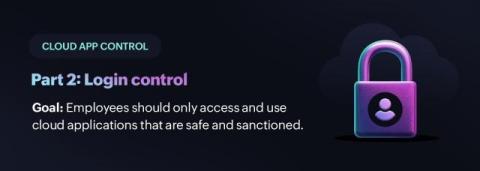
Mastering cloud app control, Part 2: Hardening login security

In Part 1 of the cloud app control series, we explored how SinaraTech, a mid-sized ecommerce company, implemented access control to help reduce shadow cloud app usage by blocking risky or redundant sites. But the story isn't over yet. The SOC team had more nuanced challenges to be addressed. Let's continue down the road to find answers to those challenges.

Top Secrets Management Tools in 2026

Organizations rely on a combination of internal systems and cloud services to run their business, all of which require sensitive credentials, such as API keys, SSH keys, database passwords, tokens and certificates. Secrets management refers to the storing, organizing and managing of these credentials to prevent unauthorized access.