Security | Threat Detection | Cyberattacks | DevSecOps | Compliance

How a pentest strengthens audit evidence and adds value

Penetration testing and auditing are both methods of gaining assurance, but they operate from different angles. A pentest evaluates how well security controls stand up to real-world attack scenarios, while an audit examines whether those controls are designed, implemented, and maintained according to policy or recognised standards.
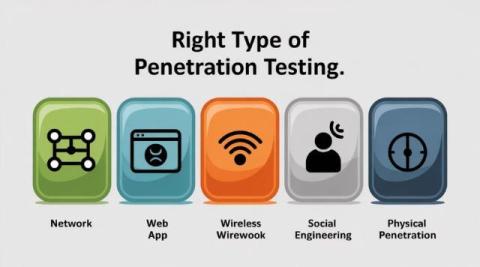

Ultimate guide to picking the right type of penetration testing

Securing your organization’s assets is more crucial than ever before! Penetration testing, also known as pen testing, has emerged as one of the best practices for identifying vulnerabilities before attackers do. This ultimate guide will help you understand how pen testing fits into an overall security strategy, outline key tools and methodologies, and detail how to ensure compliance with various regulatory frameworks.

Emerging Threat: Django SQL Injection Vulnerability (CVE-2025-64459)

CVE-2025-64459 is a critical SQL injection vulnerability in the Django web framework’s ORM. It affects Django 5.1 versions earlier than 5.1.14, Django 4.2 versions earlier than 4.2.26, and Django 5.2 versions earlier than 5.2.8. Earlier, unsupported series such as 5.0.x, 4.1.x, and 3.2.x were not evaluated and may also be affected, which makes legacy deployments especially risky.

The Missing Memory in Your Security Stack: How Attackers Exploit Stateless Systems

Security teams are facing a daunting challenge: today’s cyberattacks are slower, quieter, and more difficult to spot than ever before. Adversaries, from nation-state actors to malicious insiders, have mastered the art of flying under the radar. They stretch their activities over days, weeks, or even months, using legitimate credentials and tools to disguise their actions as normal business operations. The uncomfortable truth is that most SIEM and XDR platforms are stateless.

Human Risk Multiplier: How Mobile Devices Expand Enterprise Attack Surfaces

Modern businesses are more reliant on mobile devices than ever before. Employees need smartphones and tablets for communication, productivity, and even security authentication. As remote and hybrid work setups become more common, mobile technology is necessary for keeping workers connected to their organizations. At the same time, these devices expose a weak link in the cybersecurity chain: the human layer.

Certificate revocation is broken but we pretend it works

Last week, someone commented on my post about 47-day certificates: This perfectly captures our collective delusion that SSL certificate revocation works. You click a button, the certificate stops working. And why wouldn’t we believe that? Every CA has a big “Revoke Certificate” button right there in the dashboard. It must do something, right? Here’s the dirty truth: most revoked certificates keep working.

What's Behind The Rise of Spear Phishing Attacks on IT Leaders?

Phishing has been a mainstay of cybercrime for decades – and for good reason. Threat actors continually evolve their phishing tactics, techniques, and procedures (TTPs), adapting the method with new tools and technologies to ensure it remains highly effective. IT leaders have become especially attractive targets: their privileged access amplifies the impact of a successful compromise.

The Unmeasurable is Unmanageable: Why Cyber Resilience Takes Center Stage for Businesses

The World Economic Forum (WEF) recently published an article on cyber resilience that resonates with conversations we have daily at Arctic Wolf. Their central argument — that organizations need to move beyond basic prevention toward comprehensive, measurable resilience — reflects what we’re hearing from business leaders across industries.

CVE-2025-42890: Hard-Coded Credentials in SAP SQL Anywhere Monitor (Non-GUI)

On November 11, 2025, SAP published a security advisory as part of their November security patches, addressing a maximum severity vulnerability identified as CVE-2025-42890 in SQL Anywhere Monitor (Non-GUI) version 17.0. The vulnerability involves hard-coded credentials, which exposes system resources to unauthorized users and allows threat actors to execute arbitrary code without authentication.

The Efficiency Shift: Endpoint Efficiency Over Alert Volume

For years, the cybersecurity industry has celebrated “more detections” as proof of effectiveness. Dashboards filled with alerts were seen as signs of vigilance and control. But in practice, the opposite is true: too many alerts create noise, fatigue, and blind spots that delay real responses. When analysts are buried under a flood of low-value detections, the attacker always moves faster.