Security | Threat Detection | Cyberattacks | DevSecOps | Compliance

We Had 13 Engineers Spend Three Months Finding Vulnerabilities with LLMs

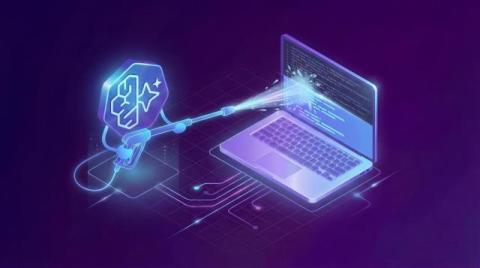
Blame for all flaws belongs to the flawed human author. Historically, the bottleneck for finding security bugs in software was human bandwidth. As pointed out in this great post by Tom Ptacek, it appears that large language models are exceptionally good at finding them with simple prompting. This adds substantial bandwidth to the effort of finding bugs.

CISO Risk Intel Brief: Material Exposures, Control Gaps, and Program Response

This executive intelligence briefing covers two distinct horizons: the past week (12–19 August 2026) and the past month (approximately 20 July–19 August 2026). It prioritizes AppSec, software supply chain, state-actor activity, cloud/IaC, identity, ransomware resilience, and regulatory developments with board-level implications. Analysis focuses on residual risk, control effectiveness, and business enablement rather than volume metrics alone.

How to Choose a React Native Development Company for AI-Driven Mobile Projects

AI-driven mobile apps grow more complex every month. The gap between a team that can actually ship one and a team that merely claims they can is wider than most product managers expect. Wrong hires cost you four to six months of rework on top of the initial build, a brutal, avoidable tax. So if you're planning a mobile product that uses machine learning, on-device inference, or real-time AI features, vendor selection deserves far more rigor than skimming a portfolio and firing off a request for proposal.

Top Wholesale Towel Providers for Commercial Use

Bulk towel sourcing sounds straightforward until you're three weeks out from peak season and your usual shipment arrives with inconsistent GSM ratings across half the order. Wholesale towel providers are one of those vendor categories where the wrong pick quietly costs you money, guest complaints, and replacement cycles that eat into your margins. Keeping consistent quality across large bulk orders, maintaining inventory without overspending, and dealing with minimum order requirements are all real pressure points. The right supplier makes all three manageable. This guide covers five solid options worth evaluating.

Best Secret Scanning Tools in 2026

Most engineering teams believe they solved secret scanning the day they flipped on GitHub’s default toggle, but the game doesn’t stop there. In many cases, an overlooked leak can spiral into a severe data breach, especially when an LLM is connected to sensitive data, internal APIs, or production infrastructure. Exposed credentials are hot and always in demand, and there’s plenty left online for bad actors to hunt.

Best Open-Source Container Security Tools in 2026

Have you ever tried to answer “Is this container safe to run?” If yes, then you know how tricky that question is. Securing containers is one of the toughest jobs in security, and hunting vulnerabilities across an estate of them gives security folks the same vibe as hunting in the fifth domain. Container vulnerabilities can live almost anywhere, from the image layers down to the kernel, and every week, a new base image, a new dependency, or a new manifest change opens a fresh gap.

From Demo to Production: Scaling Continuous Control Monitoring within the ServiceNow and Atlassian ecosystem

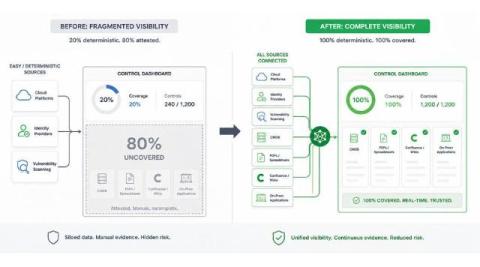
Enterprises settled the question:“is my software actually working” about a decade ago. Not by hiring more people to read logs, but by instrumenting the data plane once and letting anyone query it. Observability became infrastructure, and the people who used to read logs went and solved harder problems. GRC has never had that moment. We still read the logs, opine, and complete the attestation. And then it stops. The demo proved the concept and became the ceiling.

SaaS Doesn't Mean Secure: Why You Should Back Up Your Source Code

Your source code sits on GitHub, GitLab, Bitbucket, or Azure DevOps, along with your pipeline configurations, issue history, permissions, and metadata. Most teams assume it’s safe there because it works. But is it? Financial institutions, technology companies, and software houses all build the systems they run on. Code stopped being a byproduct of the business and became the business. And as it turns out, it needs protection of its own.