Security | Threat Detection | Cyberattacks | DevSecOps | Compliance

Design as Risk Management in Fintech Products

For developers building in fintech, most conversations revolve around security, compliance, and architecture. But one layer is often underestimated - UX design. And that's ironic, because in fintech, design is risk. Take onboarding flows, KYC steps, or multi-step transfers - the smallest friction point or unclear interface can result in lost conversions, user errors, or compliance red flags.


Opening a Business in Hong Kong: Legal Setup, Local Requirements, and Practical Realities

Company registration, Hong Kong still stands tall-not because it shouts the loudest, but because it stays consistent. It's a place that favors action over noise. While many cities offer tax perks or startup hubs, few combine legal transparency, global banking access, and geographic reach like this one does. The process isn't glamorous, but it's clean. And in a region where unpredictability can kill momentum, that kind of dependability is gold.

Clash for Windows: Key Features and How to Use It Safely

The demand for web privacy and secure Internet access has sharply increased recently. As a result, many users are scrambling to find essential tools to guarantee online privacy and safety, such as Clash for Windows, one of the more popular tools. It comes with some powerful features that not only protect privacy but also improve the browsing experience. This post examines its main features and how it can be used safely.

Data Protection vs. Cyber Resilience: Mastering Both in a Complex IT Landscape

Today's always-on, hyperconnected world requires CIOs to confront two equally important concepts: data protection and cyber resilience. As reliance on data to fuel analytics, engineering, marketing, and other key operations increases, the complexity surrounding IT infrastructure grows in tandem. Hybrid workforces, edge computing, cloud-native applications, and legacy systems add further complexity to the mix.

8 Essential Elements for an Incident Response Plan

In the first blog of our two-part incident response series, we explained how your organization can jump-start its incident response. In this second part, we’ll focus on the essential elements of an incident response plan—a critical factor for any company trying to recover from an incident quickly and confidently.

Data Flow: Why Most Organizations Don't Understand Their Information Movement

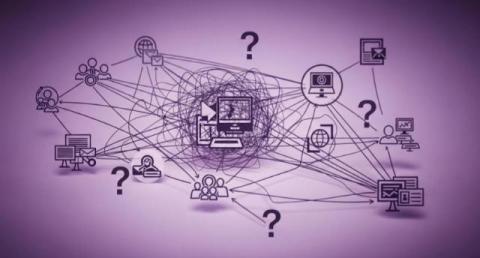
Your organization runs on data. But do you actually know where it goes every day? Between Slack messages, Google Drive shares, AI assistants, and browser uploads, your sensitive data is constantly moving: Every one of these moments is a data exposure risk.

Why AI Usage Monitoring Is Now Mission-Critical

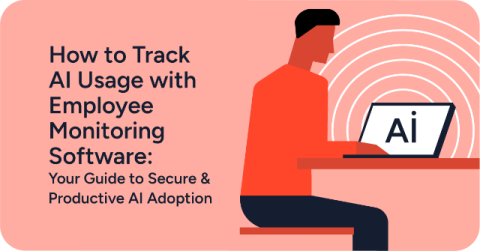
Shadow AI refers to the use of unapproved AI tools in the workplace without IT’s knowledge or oversight. Cisco’s 2025 Data Privacy Benchmark Study found that 81% of organizations lack full visibility into which AI tools their employees are using (Cisco, 2025). If you’re not monitoring AI use, you’re not managing AI risk. And in 2025, ignorance is expensive.

Alert fatigue? Manage alerts with AI and cybersecurity experts

In an environment where the volume of threats is growing and the pressure to protect critical assets is constant, oragnizations and managed service providers (MSPs) are inundated with notifications. Prioritizing critical vulnerabilities takes time, resources and careful analysis. However, false positives also slip into this constant flow of alerts. Far from being harmless, these false alarms can create an even bigger problem: alert fatigue.

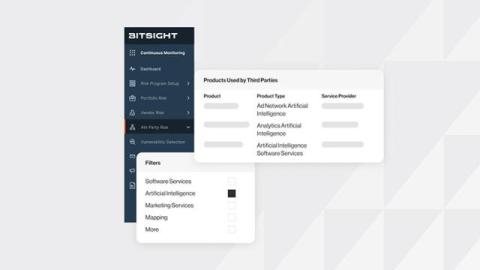
Why You Should Care About Vendors Using AI Products, and How Bitsight Helps You Find Out

Artificial intelligence—it’s a term you’ve likely encountered more than once today, and this won’t be the last. And while it reshapes how businesses operate, it’s also introducing new risks. As organizations embrace AI-powered tools for efficiency and innovation, it becomes essential to understand what technologies your vendors rely on, and what those choices mean for your cybersecurity posture.

Outdated Systems and Modern Attacks: Ireland's Cyber Reckoning Has Arrived

Cybercriminals don’t need to be sophisticated. They just need the opportunity—and in Ireland, there’s still too much low-hanging fruit. Many of the vulnerabilities being exploited across Irish networks today aren’t new. They’re years old. Attackers are taking advantage of outdated systems that haven’t been patched, relying on free, off-the-shelf tools to scan for weaknesses—and finding them far too easily. This isn’t a theoretical risk.