Security | Threat Detection | Cyberattacks | DevSecOps | Compliance

AI Security Policy in Practice: How to Define What AI Can and Cannot Do

Most organizations that try to write an AI security policy start with two lists. Approved tools and banned tools. But, that list is inevitably out of date within a month. Employees adopt AI features embedded in everyday software faster than any review board can evaluate them, and a blanket ban does not stop the behavior, instead it pushes people toward personal accounts and unmanaged services.
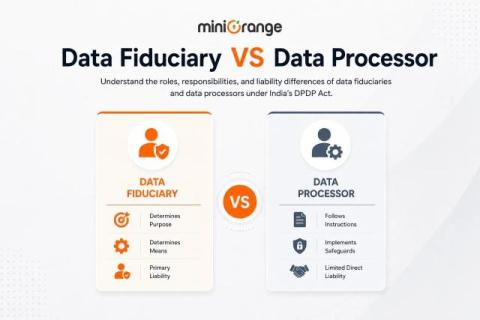
Data Fiduciary vs Data Processor: The Key Distinctions Under the DPDP Act

Under India's Digital Personal Data Protection (DPDP) Act, 2023, every organization that handles personal data falls into one of two roles: data fiduciary or data processor. A data fiduciary decides why and how personal data is processed. A data processor carries out those instructions on the fiduciary's behalf, with no independent decision-making authority. The distinction matters because the DPDP Act ties accountability, liability, and contractual duty directly to which role you occupy.

How does EDR work? Architecture, monitoring, detection and response explained

EDR (endpoint detection and response) works by deploying sensors on protected endpoints to continuously collect selected behavioral telemetry, forwarding that telemetry to a centralized analytics layer, commonly cloud-hosted, that applies detection rules, behavioral analytics, machine learning and threat intelligence, and surfacing prioritized incidents in a console where analysts can investigate and respond.

Scale Your Engineering Organization Without Losing Control

Growing engineering organizations all hit the same wall. More teams shipping software means more repositories, more permission requests, more onboarding cycles, and eventually one platform admin fielding every change. The platform that was supposed to accelerate delivery has now become the bottleneck. JFrog Projects is built to break that pattern.

Warning: Compromised Hotel Routers Send Users to Phishing Sites

Attackers are using compromised hotel Wi-Fi routers to redirect users to Microsoft 365 phishing sites, according to researchers at ReliaQuest. The attacks were observed in multiple U.S. cities, as well as across India and Saudi Arabia. These types of DNS poisoning attacks can send users to phishing sites with very little evidence that something suspicious has taken place.

Report: Scams Are Surging as Attackers Abuse Trusted Workflows

Threat actors are increasingly abusing trusted workflows to carry out attacks, according to a new report from Gen Digital. “ are not only sending malicious links or dropping malware,” the report says. “They are abusing context, sessions, workflows, brands, update systems, advertising platforms and delegated authority.

Unmasking the Invisible: How to Identify AI Tools, Hidden Devices, and Other Unknown Assets on Your Network

You cannot protect what you do not know exists. That statement has been true throughout the history of cybersecurity, but it has become even more important as organizations adopt new technologies and employees gain access to powerful AI tools. While many organizations focus on defending against external threats, they often overlook a growing problem much closer to home: devices, applications, and services operating within their environment that nobody knows about.

How Cloudflare detects MCP traffic and helps secure it

Most companies designed their resource permissions with a human user in mind. A senior engineer may be able to deploy to production, query a sensitive database, or revoke another user's access. Those privileges come with risk, but that risk has traditionally been bounded by two assumptions: the engineer will use human judgment, and the engineer can only act at human speed.