Security | Threat Detection | Cyberattacks | DevSecOps | Compliance

Scaling Video Content Without Burning Out

Video has become one of the most effective ways for businesses and creators to reach their audiences. Whether it's educational content, product demonstrations, interviews, podcasts, or behind-the-scenes footage, publishing videos consistently helps build trust and visibility across platforms. However, as the demand for fresh content grows, so does the workload behind every upload.


How Can an IBP Guide Connect Financial and Operational Drivers?

Finance and operations can drift apart even while serving one plan. Revenue goals may depend on capacity, labor, stock, quality, and delivery timing, yet those drivers often sit in separate models. Integrated business planning brings those signals into a shared routine. With clearer links between field activity and financial results, leaders can judge risk earlier, protect cash, and make practical choices before pressure reaches customers.

How to Protect Yourself from Online Scams and Cyber Threats

The internet has become a huge part of our daily lives, from banking and shopping to connecting with friends and family. While this digital integration is incredibly convenient, it also exposes us to more and more sophisticated online scams. To protect your digital assets, you need to stay alert and understand the threats out there. This guide offers practical steps to help you navigate the online world safely and avoid common problems.

What information do you need to scope a penetration test?

Accurate scoping is one of the most important stages of a penetration testing engagement. It determines what will be assessed, how much testing effort is required, and whether the final results will provide meaningful assurance against the risks an organisation is trying to understand. A scope that is too narrow may exclude important systems, user roles, or integrations.

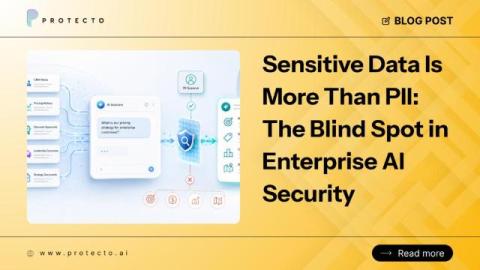
Sensitive Data Is More Than PII: The Blind Spot in Enterprise AI Security

A user asks an enterprise AI assistant a normal question: “Why did we lose the Acme deal?” The agent does what agents do. It retrieves CRM notes, pricing history, discount approvals, sales leadership comments, and a couple of internal strategy docs, then combines them into one clear answer: “Acme received a 28% discount exception, well above our standard enterprise pricing.

Cato CTRL Threat Research: SilverFox Evolves: Abuse of New Drivers and Trusted Software Hijacking Enable Remote Access with ValleyRAT in Japan

SilverFox is expanding its toolkit. In this campaign, the group combines new vulnerable-driver abuse, newly observed abuse of legitimate applications for DLL sideloading, defense evasion, and layered recovery mechanisms to keep ValleyRAT running. We investigated an active campaign targeting a Japanese organization in the industrial manufacturing sector. The attack begins with an invoice-themed phishing lure and uses attacker-controlled content hosted through legitimate QQ and Tencent Cloud services.

2026 GenAI Code Security Report: AI Is Writing More of Your Code but Security Hasn't Caught Up

New GenAI code security research shows a stubborn truth: as AI is generating more of the code entering production, secure output is not improving at the same pace. The result is a GenAI code security challenge defined by scale, model choice, and the growing need for verification. AI coding has moved past experimentation. For many teams, it is now part of how software gets built every day. That’s the opportunity. It’s also the risk.

How to Add SAML Authentication to Legacy Applications: A Step-by-Step Guide

Many organizations still rely on legacy applications to run core business processes. But that comes with limitations. According to the Workforce Agility Report, 50% of CIOs said legacy applications hold back digital transformations. More importantly, they create major security gaps. Most legacy applications, such as Oracle EBS, PeopleSoft, SAP, and JD Edwards, use authentication methods that do not fit modern identity requirements.

Engineering the Datadog Agent for FedRAMP High Certification

Software that runs inside customer-managed infrastructure creates a particular challenge at the FedRAMP High baseline. It still has to meet the applicable security and compliance requirements, even though the vendor does not control the surrounding operating system, libraries, network configuration, or maintenance practices. For Datadog, that challenge centers on the Datadog Agent, which runs directly on customer-managed hosts to collect logs, metrics, traces, and security signals.