Security | Threat Detection | Cyberattacks | DevSecOps | Compliance

Is your AI system secure enough? MITRE ATLAS Is Now Law.

For the first time anywhere, the MITRE ATLAS framework and the OWASP Top 10 for LLM applications are written into binding law. Article 15 names data poisoning, model poisoning, adversarial examples, model evasion and confidentiality attacks as threat classes you must have technical measures against—and must be able to evidence to a regulator. The question is no longer whether you have thought about AI security. It is whether you can prove your AI system holds.

Ep. 73 - EU AI Act-What Actually Lands on August 2nd, and What Slipped to 2027

The EU AI Act's August 2nd, 2026 deadline just changed shape. Host Tova Dvorin and offensive security engineer Adrian Cully separate what actually lands—Article 50 transparency duties and GPAI enforcement powers—from the high-risk obligations that slipped to December 2027. Inside: Article 15 writes MITRE ATLAS and the OWASP LLM Top 10 into binding law, the DORA / NIS2 / AI Act overlap that makes one incident reportable three times, penalties up to 7% of global turnover, and the five things a CISO should do this week. Part 1 of 2.

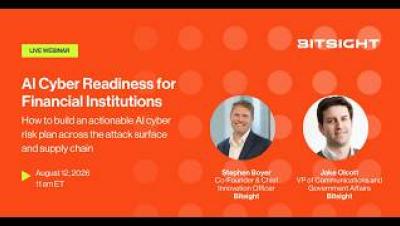
AI Cyber Readiness for Financial Institutions

Advanced AI models are changing the cyber threat landscape by accelerating vulnerability discovery, exploit development, and attacker decision-making. Regulators like the ECB have made clear: action plans are necessary. Financial institutions need to understand whether their existing cyber risk programs can keep pace, not only across their own attack surface, but across the critical third parties and software dependencies they rely on.

Your Vector Database Is Storing Patient Records #shorts

Most healthcare AI systems rely on Retrieval-Augmented Generation (RAG) and vector databases to search millions of insurance claims, physician notes, lab reports, billing documents, and customer records. But what happens before those documents become searchable? In this Short, we explain how embedding models convert raw healthcare documents into vectors—and why patient names, medical record numbers (MRNs), diagnoses, and Social Security numbers can end up stored inside your vector database if data isn't protected before ingestion.

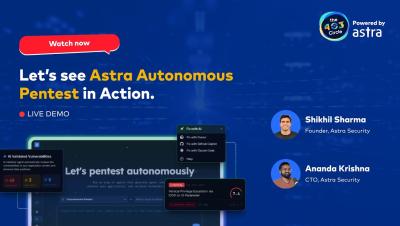
AI Pentesting in Action: Astra's Autonomous Platform Demo

AI Led Pentesting is redefining how organizations approach application security. As software development accelerates with AI-assisted coding, cloud-native applications, and rapidly evolving attack surfaces, traditional penetration testing is struggling to keep pace. In this detailed video, we explore why the future of security testing needs to be continuous, intelligent, and autonomous led by AI.

Threat Actor Dark Factory (The Future of Al Hacking?) | The X-Ops Brief

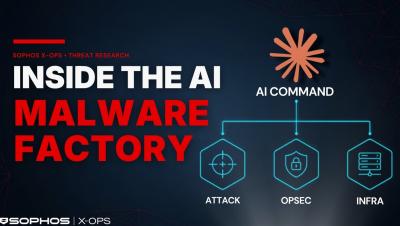
A criminal talked commercial AI models past their guardrails. Then stood up a "company" of AI agents that engineered, tested and refined malware. It began when Sophos analysts found a folder named "test" on an endpoint nobody recognised. Inside was the front end of a machine: Cobalt Strike profiles, a Telegram command channel, a hidden Sliver server behind Cloudflare and scripts written with the help of AI.