Security | Threat Detection | Cyberattacks | DevSecOps | Compliance

Secure remote access explained

As the business world adjusts to the chaotic landscape of today’s economy, securing access from remote devices and endpoints has never been more critical. Equally critical is the requirement for organizations and their employees to practice good security hygiene. With the rising number of endpoints (laptops, servers, tablets, smartphones) requiring access to corporate networks, the range of attackable targets for malicious actors has broadened substantially.

The Cyber Risks of Remote Workers Returning to the Office

The COVID-19 pandemic has created a huge list of challenges for businesses. One that is potentially going unnoticed or under-reported is cybersecurity. Specifically, as lockdown ends and as individuals return to offices and places of work, it may be the case that something malicious is already waiting for them on their devices. Here we take a look at the cyber risks of remote workers returning to the office.

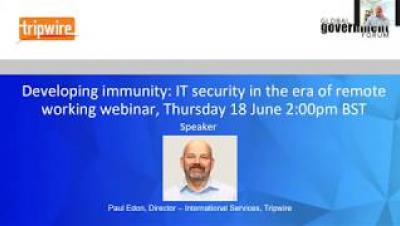
Developing Immunity: IT Security in the Era of Remote Working

This webinar explores new and emerging risks facing civil service security professionals, system managers and business owners, and provides ways to combat them.Paul Edon, Senior Director for Technical Sales and Services (EMEA) at global cybersecurity provider Tripwire, covers topics including.

How to protect your crown Jewels while working remotely

The crown Jewels, part of the Royal Collection, are the most powerful symbols of the British Monarchy. They are housed in the ‘Jewel House’, vault at the Tower of London. Ever since attempts have been made to steal the crown jewels their security has been tightened. Conventional methods to protect the crown jewels are not sophisticated enough to stop the highly motivated adversarial threats. Let’s take a closer look at how these jewels are protected.

Collaboration, Remote Work and Data Security

An interactive discussion offering a practical insight into the lives of four tech leaders from across the globe who will share the security lessons from the past few months and offer insights into how this will impact practices going forward. This is a great opportunity to hear from four exceptional speakers as they share their experiences and take questions.

Business Continuity Requires Infrastructure Continuity in Times of Remote Working

Over the last few weeks, most organisations have had to transition to enable their employees to work remotely. The key focus has been on business continuity during this trying time. Unfortunately, business continuity isn’t so easy. Keeping the day-to-day operations of the business running has been one of the hardest IT challenges that most organisations have faced in the last decade. It’s one for which many organisations might not have had a plan in place.

How important is network compliance for your remote work environment?

With a majority of the workforce now adopting a work-from-home routine, maintaining the normal functioning of your network and ensuring compliance with industry standards is not an easy job. When employees are working remotely, it is especially crucial to ensure network compliance with industry standards and internal policies to secure your network from cybersecurity breaches.

How implementing a BYOD initiative helps prepare remote workers for COVID-19 era challenges

As the COVID-19 pandemic continues to force employees to work from home, businesses are facing new and unique challenges to ensure business continuity. When remote work is mandated due to COVID-19, the transition isn’t smooth for many businesses; not every business has the infrastructure to make the abrupt shift, even given the immediate need to go remote.

Cybersecurity use cases for better remote workforce management

In the new normal, if your business has chosen remote operations, this might attract malicious actors. Hackers prey on the remote workforce whose vulnerability has increased in multifold ways. While infrastructural concerns, such as working outside the corporate IT network and using home Wi-Fi are inevitable, other issues, including using personal devices and retaining privileges to access more than required business resources add to the magnitude of this vulnerability.