Security | Threat Detection | Cyberattacks | DevSecOps | Compliance

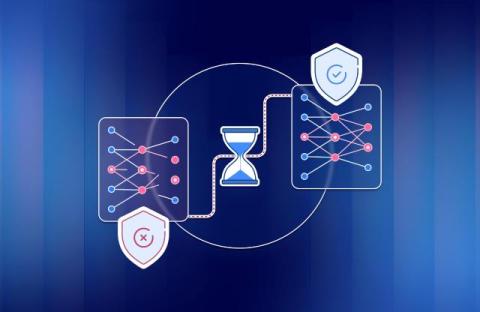
When the Classifier Is the Judge: What the Adelphi AI Case Reveals About Automated Verification

Orion Newby was a student at Adelphi University when a single automated score nearly ended his academic career. He had written a course paper himself, working with tutors from a university support program for students with learning and neurological differences. The essay was run through an AI detector, which reported it as AI-written. On the strength of that output, Newby was accused of an integrity violation, the kind of charge that can escalate toward suspension or expulsion on a repeat offense.

Why Doctors Recommend an Upper Endoscopy

Understanding the reasons for endoscopy can help ease the anxiety that often comes with medical procedures. For many patients, especially seniors, hearing that a doctor has recommended a diagnostic test can be concerning. However, an upper endoscopy is a routine and highly effective tool used to examine the digestive tract. It allows medical professionals to visually inspect the esophagus, stomach, and the first part of the small intestine (duodenum) to diagnose and treat various conditions.

5 Best SD-WAN Products With Centralized Network Policy Management

Managing network policy across a distributed enterprise has always been complex. Each branch office, remote location, and cloud connection point represents a potential gap between policy and enforcement. In traditional WAN environments, that gap often meant shipping preconfigured devices to each location, maintaining separate management platforms for different network functions, and accepting that configuration drift across dozens or hundreds of sites was largely inevitable.

Shadow AI has officially entered the enterprise

AI tools have become a workplace staple, but their unsanctioned use has given rise to shadow AI. It refers to the untracked usage of any AI tools or applications without approval or overview of the information technology (IT) or security team. This is substantiated by the Verizon 2026 Data Breach Investigations Report (DBIR) which shows how rapidly the shadow AI trend is growing.

The PAM problem no vault can solve

You can stand up a vault in two weeks. The team at One Identity says that’s about how long it takes to get the basics running, from discovery scans to approval workflows. Two to four weeks of work, and a respectable PAM foundation is in place. That’s not the hard part. The hard part starts the next morning, when actual users start working around the system.

CISO Executive Briefing: Supply Chain Front-End Compromises and Sustained Third-Party Risk Elevation

This CISO Executive Briefing analyzes material developments over two horizons: the past week (July 1–7, 2026) and the past month (June 8–July 7, 2026). Analysis draws exclusively from verified public disclosures, regulatory filings, threat intelligence platforms, and incident reporting. Focus areas include AppSec posture, software supply chain integrity, identity and contractor risk, cloud/IaC exposure, and the accelerating integration of AI into attacker TTPs.

Continuous Assurance Across Every Network Security Control

Every security leader can describe their network security architecture in confident detail: how traffic should flow, where segmentation boundaries sit, which access should never be permitted. What almost none can tell me with certainty is whether their live controls are actually enforcing that design right now, at this very hour. That gap between what we intend and what is actually running in production is where modern breaches live, and it widens with every change we make.

How to Build a Red Team Exercise for AI Workflows

AI agents now retrieve data, generate recommendations, and trigger actions across enterprise systems with little human review in between. That speed is the point, and it is also the problem. A single manipulated prompt or a poisoned data source can push an AI system toward a decision no one signed off on, and most security teams have never tested for it. Building a red team exercise for AI workflows is how you find that gap before an attacker does.

The ECB just gave banks four months to fix AI vulnerability gaps. Most of the work starts in the software supply chain.

On July 7, 2026, the European Central Bank sent a letter to the CEO of every bank it directly supervises with an unambiguous instruction: build a formal action plan against AI-enabled cyberattacks, and submit it to your supervisory team by October 31.

Falcon Secure Access Sets the Standard for Zero Trust Browser Security

The browser has become the enterprise workspace. Employees, contractors, partners, and third parties use browsers to access SaaS applications, internal web apps, admin consoles, collaboration tools, and AI services from anywhere, often across a mix of managed, unmanaged, and personally owned devices. As they do, adversaries are increasingly targeting the browser session itself.