Security | Threat Detection | Cyberattacks | DevSecOps | Compliance

AWS threat detection using CloudTrail and Sysdig Secure

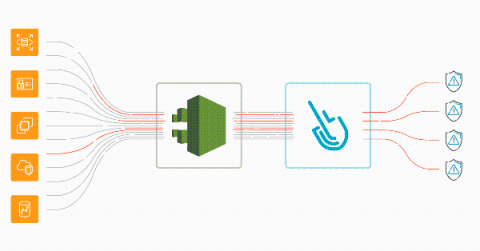
Implementing AWS threat detection with Sysdig Secure takes just a few minutes. Discover how to improve the security of your cloud infrastructure using AWS CloudTrail and Sysdig Cloud Connector. With the rise of microservices and DevOps practices, a new level of dangerous actors threatens the cloud environment that governs all of your infrastructure. A malicious or inattentive cloud API request could have a sizable impact on availability, performance, and last but not least, billing.

Securing and Monitoring AWS Container Services

Developers, operations, and security teams must work together to address key workflows to secure and monitor containers, Kubernetes and cloud services across the entire cloud-native lifecycle. By addressing mage scanning, runtime security, and compliance, along with monitoring for Kubernetes, container, applications, and cloud services you can automate protection and performance management to accelerate cloud adoption.

Container inspection: walking the security tight rope for cloud DevOps

Containers have become very popular with DevOps as a way to increase speed and agility. However, with recent reports of hackers utilizing vulnerabilities in Docker container images to compromise hosts and launch malicious containers – how can we identify this at the time of development to prevent security costing us later?

Why misconfigurations are such an issue in your containers and Kubernetes

Organizations are increasingly incorporating containers and Kubernetes into their IT infrastructure. As reported by ZDNet, Flexera’s “2020 State of the Cloud Report” found that about two-thirds (65%) of organizations were using Docker and that another 14% intended to begin using it at some point. Slightly fewer organizations (58%) were using Kubernetes at the time of the survey, by comparison, with 22% of participants saying they planned to adopt it.

Network Policy with GKE

By default, pods are non-isolated; they accept traffic from any source. The Google GKE solution to this security concern is Network Security Policy that lets developers control network access to their services. Google GKE comes configured with Network Security Policy using Project Calico which can be used to secure your clusters. This class will describe a few use cases for network security policy and a live demo implementing each use case.

Manage AppArmor profiles in Kubernetes with kube-apparmor-manager

Discover how Kube-apparmor-manager can help you manage AppArmor profiles on Kubernetes to reduce the attack surface of your cluster. AppArmor is a Linux kernel security module that supplements the standard Linux user and group-based permissions to confine programs to a limited set of resources. AppArmor can be configured for any application to reduce its potential attack surface and provide greater in-depth defense.

How to Secure Mixed Linux/Windows Clusters with Calico Policy

Calico is the only cross-platform CNI and Network Policy engine available today and is currently powers more than 150,000 known clusters across millions of nodes worldwide. Many organizations have .NET and windows workloads that they are or will eventually modernize and deploy to Kubernetes. We have been collaborating with Microsoft and joint customers over the past few years to bring Calico to the Windows platform.