Security | Threat Detection | Cyberattacks | DevSecOps | Compliance

Enforcing Enterprise Security Controls in Kubernetes using Calico Enterprise

Hybrid cloud infrastructures run critical business resources and are subject to some of the strictest network security controls. Irrespective of the industry and resource types, these controls broadly fall into three categories. Workloads (pods) running on Kubernetes are ephemeral in nature, and IP-based controls are no longer effective. The challenge is to enforce the organizational security controls on the workloads and Kubernetes nodes themselves.
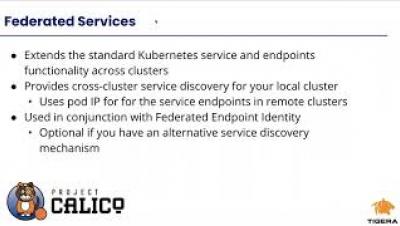
Calico Enterprise Multi Cluster Management - Federated Identity and Services

Learn how to simplify deployment and ongoing operations for more than one cluster running Calico Enterprise. What is Calico Enterprise Multi-Cluster Management How is Calico Enterprise Multi-Cluster architected How to set up Calico Enterprise Multi-Cluster Management How to enable Federated Endpoint Identity and Services for Multi-Cluster use cases A Calico Enterprise trial is available after this session and you will be able to practice these use cases on your own within a hosted lab.

LXC vs Docker: Why Docker is Better

LXC (LinuX Containers) is a OS-level virtualization technology that allows creation and running of multiple isolated Linux virtual environments (VE) on a single control host. These isolation levels or containers can be used to either sandbox specific applications, or to emulate an entirely new host. LXC uses Linux’s cgroups functionality, which was introduced in version 2.6.24 to allow the host CPU to better partition memory allocation into isolation levels called namespaces .

Enterprise Security Controls for Kubernetes

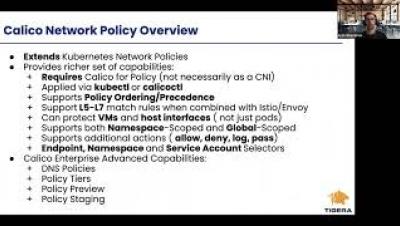
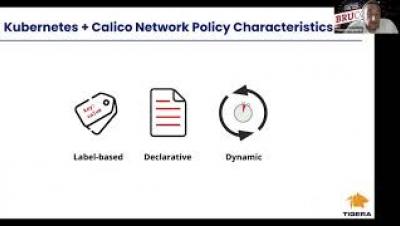
In this talk, we will explore how to meet common enterprise security control needs when running Kubernetes. Specifically, we will look at a range of common enterprise security needs and how you can meet these with standard Kubernetes primitives and open source projects such as Calico, or take it a step further with the additional features of Calico Enterprise.

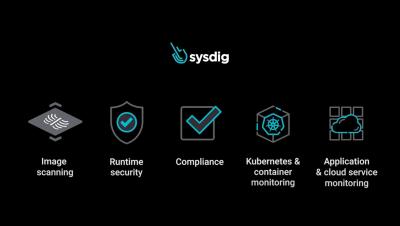
5 Essential workflows for secure DevOps

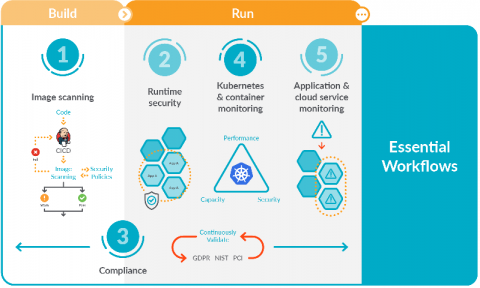
Focusing on these five essential workflows for secure DevOps will help you get started implementing monitoring, security, and compliance for containers and Kubernetes. You might be starting to adopt DevOps and find that it dramatically simplifies deploying applications in containers and Kubernetes. However, you probably also found that it adds a new set of complexities for managing, securing, and troubleshooting applications.

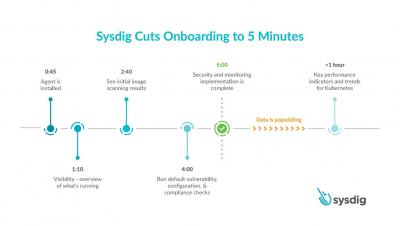
Sysdig cuts onboarding for container and Kubernetes visibility and security to 5 minutes

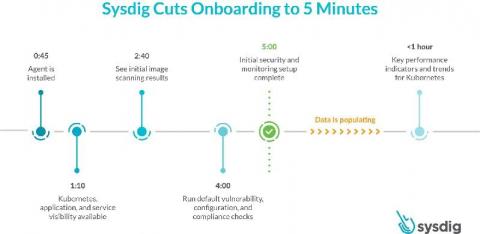
Today, we are excited to announce a faster onboarding for Kubernetes visibility and security. With the SaaS-first approach and new enhancements to the Sysdig Secure DevOps Platform, you can get results after just a five-minute setup. This release includes a new guided onboarding process, out-of-the-box dashboards as part of curated essential workflows, and a new Sysdig Essentials tier. 5 minutes to onboard secure DevOps - YouTube An error occurred.

Getting started with secure DevOps

As you move to the cloud, your focus is on developing and deploying your applications. You may leave some functions for later, thinking they will slow you down. So when challenges appear your team feels unprepared. You need tools that are built for containers and Kubernetes, like the Sysdig Secure DevOps Platform. So your team can build visibility and security together in a secure DevOps workflow, and ship applications faster.

5 minutes to onboard secure DevOps

Today, we are excited to announce a faster onboarding for Kubernetes visibility and security. With the SaaS-first approach and new enhancements to the Sysdig Secure DevOps Platform, you can get results after just a five-minute setup. This release includes a new guided onboarding process, out-of-the-box dashboards as part of curated essential workflows, and a new Sysdig Essentials tier.