Security | Threat Detection | Cyberattacks | DevSecOps | Compliance

Preventing DoS attacks in Kubernetes using Falco and Calico

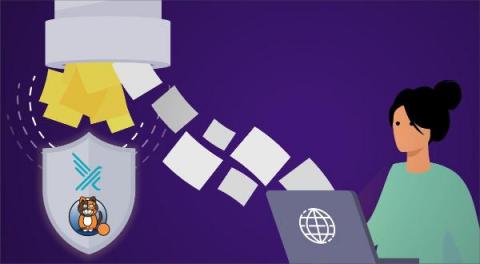
A Denial-of-Service (DoS) is an attack meant to shut down a machine or network, making it inaccessible to its intended users, so dos Kubernetes is a potential target. In the case of Distributed Denial-of-Service (DDoS), the attacker will look to maintain some form of anonymity so their activities cannot be traced. They can route traffic through Tor and VPN infrastructure to scan, attack, or compromise the target, while maintaining anonymous communications.

Container images simplified with Ko

In a previous article, I wrote about how — and why — you might want to use the Google Open Source group’s Jib tool to build your Java application container images. Jib builds slim, JVM-based, OCI-compliant images that follow best practice guidelines without the need for a container runtime like Docker, and it removes the need to write and manage Dockerfiles. What if you are building Go applications, though?

DirtyCred: Opening Pandora's Box to Current and Future Container Escapes

DirtyCred is a new Linux kernel exploitation technique that allows kernel Use After Free (UAF) or Double free vulnerabilities to swap a credential or file structure on the kernel heap memory to escalate privileges to root. The replaced credential or file structure provides root access on a Linux host and breaks out of the container at the same time. Ph.D.

Fortify & Secure Your Kubernetes Environment with Rubrik Security Cloud

Enterprises have benefited from encapsulating applications into lightweight, independent units called microservices. By adopting an architectural pattern of loosely coupled and independently deployed services, microservices can rapidly deliver complex applications at scale without the typical technical debt of legacy applications.

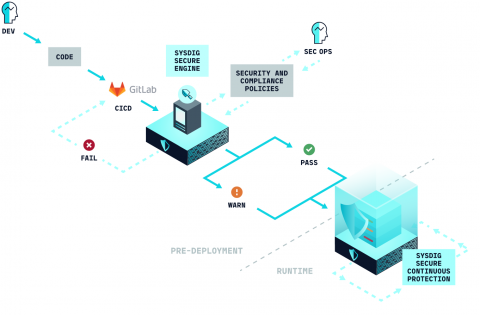
Extract maximum value from your Microsoft Sentinel SIEM with Sysdig Secure

Sysdig has validated its security, monitoring, and compliance capabilities with multiple Azure-related services. The latest is Microsoft Sentinel, a SIEM(Security Information and Event Management) solution on Azure that works really well with Sysdig’s cloud workload protection capabilities. Sysdig and Microsoft have a common goal of helping customers ship cloud apps faster by helping them see more, secure more, and save time in troubleshooting deployed microservices.

Choosing Secure Container Images: Secure Cloud-native Development Series

When it comes to building secure cloud-native applications, the baseline is choosing a secure container image. Docker defines a container as “a standard unit of software that packages up code and all its dependencies, so the application runs quickly and reliably from one computing environment to another.” The problem is, they’re often a pain point for many developers.

Building honeypots with vcluster and Falco: Episode I

Honeypots are, at a high level, mechanisms for luring attackers in order to distract them from legitimate access or to gather intelligence on their activities. We’re going to build a small example here of a honeypot using vlcuster and Falco. In this first episode, we explain how to build a simple SSH honeypot using vcluster and Falco for runtime intrusion detection.

Choosing the best Node.js Docker image

Choosing a Node.js Docker image may seem like a small thing, but image sizes and potential vulnerabilities can have dramatic effects on your CI/CD pipeline and security posture. So, how do you choose the best Node.js Docker image? It can be easy to miss the potential risks of using FROM node:latest, or just FROM node(which is an alias for the former). This is even more true if you’re unaware of the overall security risks and sheer file size they introduce to a CI/CD pipeline.

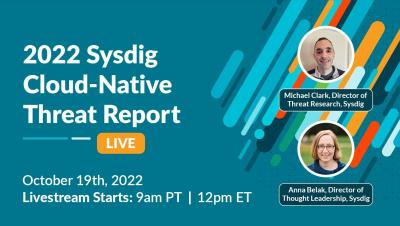
Sysdig 2022 Threat Report: Cloud-native threats are increasing and maturing

The first annual cloud-native threat report from Sysdig explores some of the year’s most important security topics in the cloud. As the use of containers and cloud services keeps growing, threat actors are increasingly turning their attention to this new attack surface. The cloud offers unique opportunities for threat actors due to the inherent scalability and complexity of cloud resources.