Security | Threat Detection | Cyberattacks | DevSecOps | Compliance

How to Stop Container Escape and Prevent Privilege Escalation

Container escape is a security risk in which malicious players can leverage a containerized application’s vulnerabilities to breach its isolation boundary, gaining access to the host system’s resources. Once an attacker accesses the host system, they can escalate their privilege to access other containers running in the machine or run harmful code on the host. Depending on how vulnerable the host is, the actor could also access other hosts in the network.

Mitigating CVE-2022-0811: Arbitrary code execution affecting CRI-O

A new vulnerability CVE-2022-0811, alias cr8escape, with CVSS 8.8 (HIGH) has been found in the CRI-O container engine by Crowdstrike. This vulnerability can lead to arbitrary code execution. The container engines affected are: Any containerized infrastructure that relies on these vulnerable container engines is affected as well, including Kubernetes and OpenShift (version 4.6 to 4.10).

Defense in depth with Calico Cloud

Last month, we announced the launch of our active cloud-native application runtime security. Calico Cloud’s active runtime security helps security teams secure their containerized workloads with a holistic approach to threat detection, prevention, and mitigation. As security teams look to secure these workloads, it’s also critical that they employ a defense-in-depth strategy.

IBM Z Application Environment Modernization with Sysdig

Recently, IBM announced the IBM Z and Cloud Modernization Center1 for the acceleration of hybrid cloud and to help IBM Z clients accelerate the modernization of their applications, data, and processes in an open hybrid cloud architecture. By combining IBM Z systems built for transactional integrity, throughput, reliability, and availability with hybrid cloud development, IBM is combining the best of both worlds.

cr8escape: New Vulnerability in CRI-O Container Engine Discovered by CrowdStrike (CVE-2022-0811)

CrowdStrike’s Cloud Threat Research team discovered a zero-day vulnerability (CVE-2022-0811) in CRI-O (a container runtime engine underpinning Kubernetes). Dubbed “cr8escape,” when invoked, an attacker could escape from a Kubernetes container and gain root access to the host and be able to move anywhere in the cluster.

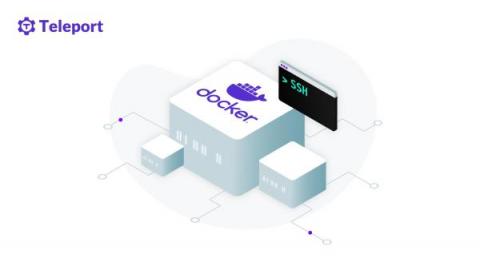
SSH into Docker Container or Use Docker Exec?

SSH has always been the default mechanism to get remote shell access into a running Unix or Linux operating system from a terminal client to execute commands. While SSH is familiar, Docker provides more lightweight and easier-to-use methods that don’t require running your container with an SSH server. This post will explore two methods to get shell access into a Docker container using OpenSSH and the docker exec command.

Zero-trust for cloud-native workloads

There has been a huge uptick in microservices adoption in the data analytics domain, primarily aided by machine learning (ML) and artificial intelligence (AI) projects. Some of the reasons why containers are popular among ML developers is the ease of portability, scalability, and quick access to data using services—specifically network services. The rise of cloud-native applications, especially for big data in the analytics sector, makes these applications a prime target for cyber crime.

Cross-Account and Cross-Cluster Restore of Kubernetes Applications

Cross-Account and Cross-Cluster Restore of Kubernetes Applications Using CloudCasa. Users can now browse and map the available storage classes in the source and destination cluster when restoring. When performing cross-account Kubernetes restores in AWS, the system will now automatically handle changing volume IDs for PVs. Additionally, when creating an EKS cluster on restore, CloudCasa now allows customization of the IAM role, security group, VPC group etc. to be used in the new account.

Real-Time Threat Detection in the Cloud

Organizations have moved business-critical apps to the cloud and attackers have followed. 2020 was a tipping point; the first year where we saw more cloud asset breaches and incidents than on-premises ones. We know bad actors are out there; if you’re operating in the cloud, how are you detecting threats? Cloud is different. Services are no longer confined in a single place with one way in or one way out.

CVE-2022-0847: "Dirty Pipe" Linux Local Privilege Escalation

Right on the heels of CVE-2022-4092, another local privilege escalation flaw in the Linux Kernel was disclosed on Monday, nicknamed “Dirty Pipe” by the discoverer. MITRE has designated this as CVE-2022-0847. Similar to the “Dirty COW” exploit (CVE-2016-5195), this flaw abuses how the Kernel manages pages in pipes and impacts the latest versions of Linux.