Security | Threat Detection | Cyberattacks | DevSecOps | Compliance

Adding Container and IaC security to the Snyk plugin for Jetbrains

We’re excited to announce that infrastructure as code (IaC) and container security are joining code and open source dependency security in the free Snyk plugin for JetBrains IDEs. As of today, developers using JetBrains IDEs can secure their entire application with a click of a button. Snyk Security for JetBrains increases code security and reduces time spent on manual code reviews by empowering developers to find and fix issues within their JetBrains IDEs.

Triaging A Malicious Docker Container

Malicious Docker containers are a relatively new form of attack, taking advantage of an exposed Docker API or vulnerable host to do their evil plotting.​​ In this article, we will walk through the triage of a malicious image containing a previously undetected-in-VirusTotal (at the time of this writing) piece of malware! Leaving a Docker API endpoint exposed to the world can have a variety of negative consequences.

CloudCasa Adds AWS Cloud Security Posture to Kubernetes Security Posture Reviews

Continuing with our security-first approach to Kubernetes data protection, in addition to Kubernetes Security Posture Reviews to scan your environment for vulnerabilities and misconfigurations, CloudCasa also added Cloud Security Posture Management for Amazon Web Services (AWS). Most attacks on cloud are the result of misconfigurations and mistakes, per industry analyst, Gartner. The research firm went on to forecast that through 2025, 99% of such attacks would be the customer’s fault.

Vulnerable AWS Lambda function - Initial access in cloud attacks - Blog Article

Serverless is becoming mainstream in business applications to achieve scalability, performance, and cost efficiency without managing the underlying infrastructure. Our security research team will explain a real attack scenario from the black box and white box perspective on how a vulnerable AWS Lambda function could be used by attackers as initial access into your cloud environment. Finally, we show the best practices to mitigate this vector of attack.

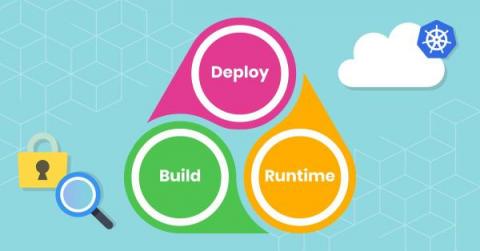
What a more holistic approach to cloud-native security and observability looks like

The rise of cloud native and containerization, along with the automation of the CI/CD pipeline, introduced fundamental changes to existing application development, deployment, and security paradigms. Because cloud native is so different from traditional architectures, both in how workloads are developed and how they need to be secured, there is a need to rethink our approach to security in these environments.

Customizing the JFrog Xray Horizontal Pod Autoscaler

In cloud native computing (Kubernetes in our case), there is a requirement to automatically scale the compute resources used for performing a task. The autoscaling cloud computer strategy allows to dynamically adjust the active number of application servers and allocated resources instead of responding manually in real-time to traffic surges that necessitate more resources and instances.

Will the Cloud Kill Security Agents?

The “agents or no agents” debate is ancient and eternal. Every decade or so, we go through another round of “agents are terrible, let’s end them” and “we need more visibility and control to secure the system, maybe we’ll call it a ‘sensor’ this time.” We ultimately always land on the same conclusion. There are no silver bullets. Today, the debate is alive and well because cloud is the new frontier, so surely agents are dead this time?

Data Storage in Kubernetes

If you’re reading this article, you’re probably either running a Kubernetes cluster or planning to run one. Whatever the case may be, you will most likely need to have a look at data—how to store it and how to secure it. There are different types of stored data in Kubernetes: In this article, we will review how to deal with each of these data types in a Kubernetes cluster.

Calico Cloud: Active build and runtime security for cloud-native applications

Calico Cloud has just celebrated its 1-year anniversary! And what better way to celebrate than to launch new features and capabilities that help users address their most urgent cloud security needs. Over the past year, the Tigera team has seen rapid adoption of Calico Cloud for security and observability of cloud-native applications.

CloudCasa Adds to Cyber Resilience with Kubernetes Security Posture Reviews

CloudCasa was built to provide data protection services for Kubernetes and cloud native workloads. As a SaaS backup solution for Kubernetes, CloudCasa was designed from the ground up to be a secure, well-architected, SaaS platform that improves a customer’s security posture against sophisticated cyber-attacks.