Today, researchers found a new HIGH vulnerability on the famous Spring Cloud Function leading to remote code execution (RCE). The vulnerability CVE-2022-22963 would permit attackers to execute arbitrary code on the machine and compromise the entire host.
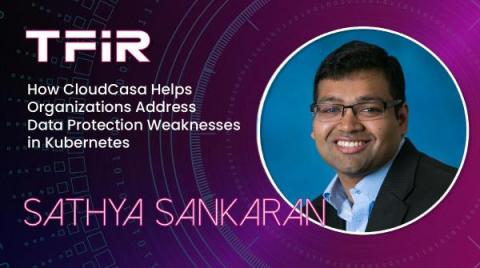
In a recent episode of TFiR Let’s Talk, Swapnil Bhartiya sat down with Sathya Sankaran, Chief Operating Officer at CloudCasa by Catalogic, to discuss how the Kubernetes ecosystem is shifting and how CloudCasa is helping organizations address the data protection weaknesses in Kubernetes and cloud-native infrastructure and adopt these new technologies.
Containerization has gone mainstream, and Kubernetes won out as the orchestration leader. Building and operating applications this way provides massive elasticity, scalability, and efficiency in an ever accelerating technology world. Although DevOps teams have made great strides in harnessing the new tools, the benefits don’t come without challenges and tradeoffs.
On March 22, the hacking group Lapsus$ published a Twitter post with a number of screenshots taken from a computer showing “superuser/admin” access to various systems at authentication firm Okta that took place in January this year. Okta is a platform in the #1 platform in Identity-as-a-Service (IDaaS) category, which means that it manages access to internal and external systems with one login.
On March 21st, President Biden released a warning about the possibility of Russian cyber warfare attacks against targets in the West as a response to sanctions. This is apparently backed by “evolving intelligence” and specifically mentions American companies and critical infrastructure.
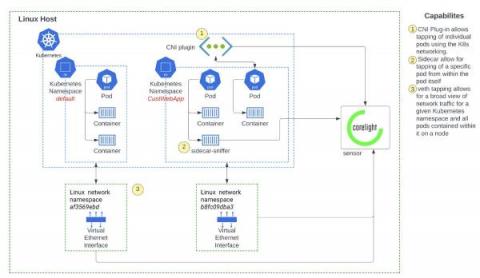
Infrastructure security is something that is important to get right so that attacks can be prevented—or, in the case of a successful attack—damage can be minimized. It is especially important in a Kubernetes environment because, by default, a large number of Kubernetes configurations are not secure. Securing Kubernetes at the infrastructure level requires a combination of host hardening, cluster hardening, and network security.