Security | Threat Detection | Cyberattacks | DevSecOps | Compliance

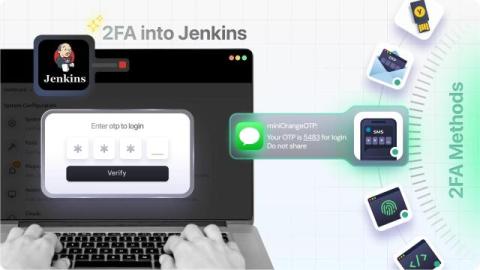
The Complete Guide to Jenkins 2FA with miniOrange

When it comes to Jenkins, relying on just usernames and passwords puts your pipelines at risk. This blog explains why 2FA is essential for Jenkins security and how it helps block threats like credential stuffing and brute-force attacks. You’ll explore different 2FA methods and see how the miniOrange Jenkins 2FA plugin makes it easy to protect both user access and APIs.

Continuous DAST in CI/CD Pipelines: A Practical Guide

Every pipeline shift introduces a new blind spot. SAST catches coding flaws, and SCA catches dependency risks; however, as delivery moves to CI/CD, new risks have emerged, not in the code itself, but in how it is executed. From broken access controls and authentication drift to logic flaws behind feature flags, these threats show up in production. Continuous DAST in CI/CD pipelines isn’t just “another layer” but a runtime check that’s most likely to catch what gets exploited.

DevSecOps Done Right: CI/CD Pipeline Security for Mobile Apps

Modern software delivery depends on speed, scale, and automation. CI/CD pipelines sit at the center of it all. An efficient CI/CD pipeline empowers your teams to develop features faster, respond to market demands quickly, and stay competitive in a crowded market landscape. But with that speed comes risk. What makes CI/CD pipeline security so critical is the level of access these systems have. They interact with your source code, cloud infrastructure, and deployment environments with elevated permissions.

What is Continuous Signing in CI/CD? Importance and Best Practices

Keeping your software secure has become more important than ever due to various types of cybersecurity threats. If you are thinking about what measures you can take to protect it, then Continuous Signing in CI/CD is one way. Continuous Signing in CI/CD (Continuous Integration/Continuous Deployment) is a method that helps ensure that your code and data are protected throughout the development process.

GitProtect's Report Highlights Cost Of Weak DevOps Pipelines

Imagine launching the year’s most anticipated game—only to have your screen freeze at the climax. Or waiting for your favorite show’s finale, only to encounter a technical error. In the world of DevOps, where time and reliability are everything, outages on platforms like Azure DevOps, GitLab, GitHub, and Jira don’t just cause frustration — they can paralyze the entire software development process.

What Ransomware Teaches Us About Weak Links in the Development Pipeline

Ransomware attacks aren't just hitting banks and government agencies anymore-they're going straight for the jugular of how modern software is made. That's right: the development pipeline has become prime hunting ground. And while companies scramble to patch after the damage is done, the smarter ones are shifting focus to where it all begins-the code, the pipeline, and the people pushing it live.

Is Continuous Deployment Too Risky? Security Concerns and Mitigations

Adopting Continuous Deployment, an extreme form of software delivery automation, can drastically speed up software delivery, but it also introduces critical security challenges. Some of the most severe, global-scale security breaches of recent years (Solarwinds and Kaseya are just two examples) were related to breaches in software delivery infrastructure. Continuous deployment has the potential to make things worse.

What Is Jenkins? Features, Benefits & Core Concepts

Jenkins is an open-source automation server that is widely used for continuous integration (CI) and continuous delivery (CD) in software development. It is an automated engine that builds, tests, and deploys the application so that development teams can routinely integrate code changes in a way that ensures the software is deployable. Created as the Hudson project in 2004, Jenkins has grown to become an infinitely extensible and customizable tool hosting an enormous ecosystem of plugins.

Why CI/CD Security Scanning Is Non-Negotiable in Modern DevSecOps

In the race to deliver software faster and more frequently, Continuous Integration and Continuous Deployment (CI/CD) pipelines have become the backbone of modern DevOps workflows. But with this speed comes a critical trade-off — security. Integrating security checks into your CI/CD pipeline is no longer optional; it’s a necessity. This is where CI/CD security scanning steps in.

Best Practices for Using ionCube Encoder in CI/CD Pipelines

With the growing adoption of automated build pipelines, the ionCube Encoder CI Edition offers a tailored solution for developers needing flexible, temporary machine licensing within their CI/CD workflows. The CI Edition is ideal for use in ephemeral environments like Docker containers or cloud-based runners, allowing encoding operations to occur seamlessly as part of your integration process. If you’re not yet familiar with this product, our FAQ entry provides a concise overview.