Vulns Unleashed: Pwnkit
Dive in to the Pwnkit privilege escalation vulnerability with Kyle and Brian!


In November 2021, a vulnerability was discovered in a ubiquitous Linux module named Polkit. Developed by Red Hat, Polkit facilitates the communication between privileged and unprivileged processes on Linux endpoints. Due to a flaw in a component of Polkit — pkexec — a local privilege escalation vulnerability exists that, when exploited, will allow a standard user to elevate to root.
Last week, a critical vulnerability identified as CVE-2022-0185 was disclosed, affecting Linux kernel versions 5.1 to 5.16.1. The security vulnerability is an integer underflow in the Filesystem Context module that allows a local attacker to run arbitrary code in the context of the kernel, thus leading to privilege escalation, container environment escape, or denial of service.
On Jan. 18, 2022, researchers found a heap base buffer overflow flaw (CVE-2022-0185) in the Linux kernel (5.1-rc1+) function “legacy_parse_param” of filesystem context functionality, which allows an out-of-bounds write in kernel memory. Using this primitive, an unprivileged attacker can escalate its privilege to root, bypassing any Linux namespace restrictions.
What do Linux vulnerabilities and natural disasters have in common? Something seemingly dormant can suddenly spring to life, exposing activity beneath the surface. Several days ago, a security researcher published a high-severity vulnerability named PwnKit that impacts most major Linux distributions. The scary part? It’s existed since May of 2009. Polkit is a component for controlling privileges in Unix-like operating systems and is included by default on most major Linux distributions.
A new advisory from Qualys discloses a local privilege escalation bug in SUID-set program ‘pkexec’. The flaw has been designated the CVE ID of CVE-2021-4034 and nicknamed “pwnkit” by the vulnerability finders. The CVSSv3 base score is calculated to be a high 7.8 out of 10.0. The vulnerable program is a part of Polkit, which manages process privileges.
Since 2009, more than 12 years ago, all major Linux distributions have been incorporating a high severity security hole that remained unnoticed until just recently. The vulnerability and exploit, dubbed “PwnKit” (CVE-2021-4034), uses the vulnerable “pkexec” tool, and allows a local user to gain root system privileges on the affected host. Polkit (formerly PolicyKit) is a component for controlling system-wide privileges in Unix-like operating systems.
Threat actors go to great lengths to hide the intentions of the malware they produce. For instance, binaries are often encrypted or packed. Typically, encrypting binaries is enough to thwart automated analysis platforms such as Cuckoo or other automated malware sandboxes. The implication is that automated detection of malicious programs might not be successful.
This week, Linux maintainers and vendors disclosed a heap overflow vulnerability in the Linux Kernel. The vulnerability has been issued a Common Vulnerability and Exposures ID of CVE-2022-0185 and is rated as a High (7.8) severity. The flaw occurs in the Filesystem Context system when handling legacy parameters. An attacker can leverage this flaw to cause a DDoS, escape container environments, and elevate privileges.
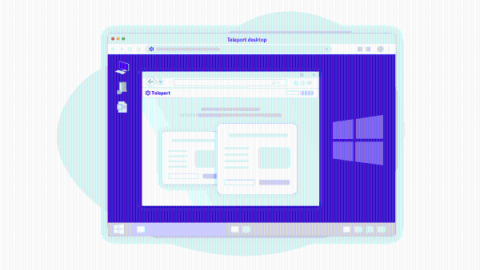
We are excited to welcome Windows hosts to the Teleport Access Plane. For the past 5 years we’ve helped refine our Access Plane for Linux hosts, providing short-lived certificate-based access, RBAC and developer-friendly access to resources. As we’ve rolled Teleport to larger organizations, we found that people wanted the same convenience and security of Teleport but for Windows hosts.