Security | Threat Detection | Cyberattacks | DevSecOps | Compliance

Access Certification: Process, Benefits & Best Practices

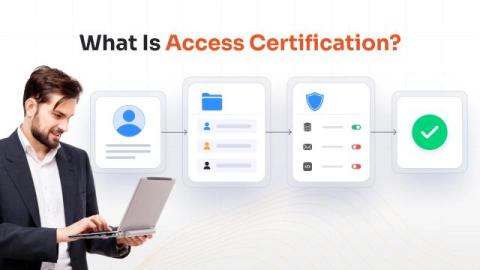
Access issues don’t usually come from one big mistake. They build up over time through small decisions. Temporary access gets extended, roles change but permissions stay the same, and vendor accounts remain active longer than expected. Individually, these situations don’t seem urgent but over time, they make it difficult to track who has access to what, and whether that access is still required. This is where access certification becomes important.

How AI Threat Detection Stops Breaches Before They Happen: A No-Fluff Guide

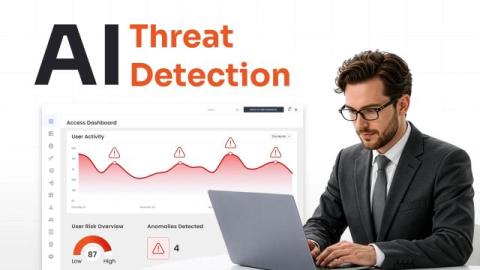
What’s changed in the cybersecurity world after the advent of Artificial Intelligence (AI)? The speed of response has gone up. The Security Operations Center (SOC) and internal cybersecurity teams are able to detect, respond to, and mitigate attacks faster than ever. It’s a no-brainer that AI agents can neutralize identity-based attacks within seconds, before a human analyst checks the alerts.

Who's behind the agent? Security, trust, and compliance in agentic payments

We’ve been collaborating with others to explore how agentic commerce and enterprise agents will work. Alfonso Gómez-Jordana Mañas, co-founder of Crossmint shares his thoughts on the current state of payment security and how compliance mechanisms like KYC and AML need to evolve to support agentic commerce. OpenClaw provided users with an open-source framework to launch AI agents.

10 Essential Tools Every Cybersecurity Professional Uses

Working in cybersecurity means that you are constantly dealing with all kinds of potential threats. And that's why it's inherently important to find ways of improving that security, which can prove to be very challenging a lot of the time. But that's why cybersecurity professionals are continually relying on professional tools to get their job done. Here's what they are using.

Obrela's 2025 Digital Universe Report highlights shift to stealthy, identity-driven cyberattacks

London, 21st April - Obrela has released its Digital Universe Report 2025, revealing a significant shift in the global cyber threat landscape as attackers move away from high-volume attacks toward more targeted, stealth-driven techniques focused on identity, access and persistence.

Building Know Your Agent: The missing identity layer for agentic commerce

AI agents are being deployed in the real world at pace. In the enterprise realm, they’re accessing APIs, shipping code, and running decisioning workflows on behalf of the organizations and individuals who deploy them. Entirely new businesses have sprung up, leveraging AI agents to streamline customer support and sales processes.

Managing the non-human identity lifecycle in modern environments

Non-human identities (NHIs) such as service accounts, API keys, tokens, and workload identities now outnumber human users by 10x or more in most organizations. Unlike human identities that follow HR-driven lifecycles, NHIs are often created ad hoc, granted excessive permissions, and rarely decommissioned. Effective NHI lifecycle management spans five stages: discovery and inventory, secure provisioning, ongoing monitoring, credential risk management (including rotation), and decommissioning.

Persona integrates with ConnectID to expand user age assurance options

In Australia, the introduction of the Social Media Minimum Age Act increased the importance of gauging a user’s age without compromising their privacy. To help organizations navigate these requirements, Persona now supports an integration with ConnectID, an Australian digital identity network.

Why Identity Security is Key To Managing Shadow AI

Employees are adopting Artificial Intelligence (AI) tools to enhance their productivity, but they rarely consider the security implications of doing so. When an employee pastes sensitive customer data into an unapproved AI tool, that data is processed by a third-party model outside the organization’s control, often leaving no audit trail for security teams to review.

Identity at the Edge: How the Sixth Annual Identity Management Day Highlights the New Frontiers of Trust

Each year, Identity Management Day (IMD) serves as a global reminder that managing digital identities is more than a technical requirement; it is a cornerstone of modern trust. Now in its sixth year, IMD continues to emphasize how identity itself is evolving, stretching beyond human users to encompass machines, automated agents, and even AI-generated personas.