Security | Threat Detection | Cyberattacks | DevSecOps | Compliance

Why AI Changes Everything About Software Risk

Software risk has always existed. What’s changed is the scale, speed, and economics of it. For decades, organizations operated under a relatively stable set of assumptions: humans write code, security teams scan it, vulnerabilities get prioritized and patched. The process was slow, imperfect, and often underfunded — but it was manageable. AI has dismantled those assumptions. And if your security program is still calibrated to the old model, you’re already behind.

How to Collaborate with Vendors and Clients in Jira and Confluence Without Giving Full Access

Most teams using Jira and Confluence hit the same wall the moment external users get involved. You need clients and vendors to collaborate. But the platform forces a bad choice. Either give them full access and risk exposing internal data, or lock things down and slow everything to a crawl. Add to that the cost of licenses, and it becomes a structural problem, not just an operational one. The reality is simple. External users do not need your system.

ISO 42001:2023 and the New Reality of Cloud AI Data Risk

As organizations accelerate adoption of AI systems, the scope of data security has dramatically expanded. Sensitive data is no longer simply stored. It is continuously accessed, transformed, and moved across cloud services, APIs, and AI pipelines. For use cases from model training to inference, AI systems depend on dynamic data flows that introduce new and often unseen risks.

Prompt injection protection: Detecting and blocking malicious AI instructions

Author: Alexander Ivanyuk, Senior Director, Technology Generative AI changes how people work with information. A user can ask a question, upload a document, summarize a ticket, draft an email or ask an AI assistant to help with a workflow. That is useful because the interaction feels natural. But the same natural-language interface also creates a new security problem: instructions and data can become mixed together.

10 cloud data security solutions mid-market teams should consider in 2026

Cloud data security solutions protect sensitive data across SaaS, IaaS, and hybrid environments, covering discovery, classification, access governance, DLP, and evidence for compliance. No single tool covers everything. The right stack depends on where regulated data actually lives, who has access to it, and what evidence your compliance team needs to satisfy auditors. Regulated data doesn't stay in one place, and cloud data security solutions need to account for that reality.

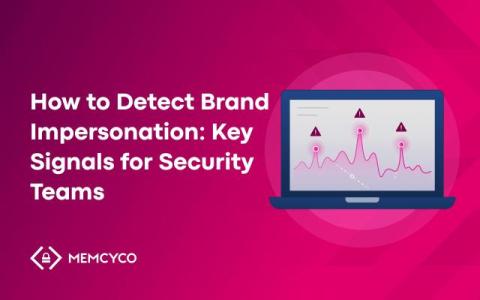
How to Detect Brand Impersonation: Key Signals for Security Teams

Brand impersonation detection is the process of identifying fake domains, cloned brand experiences, and exposure signals that show attackers are using a trusted brand to deceive customers, employees, or partners. For security teams, the harder problem is not finding every impersonation asset. It is knowing which signals indicate live user exposure and which ones should change the response.

How CISOs should evolve training and readiness with Bobby Ford

Join us for this week's Defender Fridays as Bobby Ford, Chief Strategy and Experience Officer at Doppel, breaks down how AI is amplifying social engineering attacks across every channel and what CISOs need to do differently to get ahead of the threat. At Defender Fridays, we delve into the dynamic world of information security, exploring its defensive side with seasoned professionals from across the industry. Our aim is simple yet ambitious: to foster a collaborative space where ideas flow freely, experiences are shared, and knowledge expands.