Security | Threat Detection | Cyberattacks | DevSecOps | Compliance

AI SecOps Worskhop Series: Building Custom Stand-Alone Dashboard Applications

This hands-on workshop is designed for security professionals, developers, and analysts who want to unlock the full potential of their security data through custom dashboards and visualizations. We will guide attendees through a practical, step-by-step process demonstrating precisely how to leverage the robust capabilities of the LimaCharlie API in conjunction with the power of Claude Code to build rich real-time dashboards.

Auto-investigate unresolved SentinelOne threats with Tines

Tired of manually triaging SentinelOne alerts and copying details into Jira? This story from the Tines library automatically pulls unresolved SentinelOne threats daily, filters out duplicates, and creates detailed Jira tickets for every net-new incident — so your team can focus on responding, not chasing alerts.

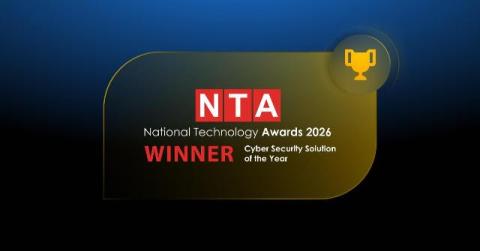
Keeper Security Named Cyber Security Solution of the Year at the National Technology Awards

Keeper Security has been named Cyber Security Solution of the Year at the 2026 National Technology Awards, recognising the company’s continued innovation in enterprise cybersecurity and identity protection. Hosted by National Technology News, the National Technology Awards celebrate organisations and technology leaders driving excellence, innovation and transformation across the UK technology sector.

What is an MSSP in Cybersecurity?

A Managed Security Service Provider (MSSP) in cybersecurity is a third-party organization that remotely manages and secures a client’s IT systems, networks and data. MSSPs provide cybersecurity services, including threat monitoring, incident response and compliance support. By outsourcing these functions, organizations can improve their security posture and reduce the burden on internal teams without requiring a large in-house security operations team.

ITDR automation best practices for security teams

ITDR automation best practices close the gap between when identity detection fires and when containment executes. Most programs detect identity attacks reliably but route the response to a human queue, turning active defense into a forensics workflow. Pre-built playbooks tied to high-confidence detection rules, plus protocol-layer blocking, are what convert ITDR from alert generation into attack containment. Identity-based attacks progress in minutes.

Network Device Monitoring: A Complete 2026 Guide

A lot of teams are in the same spot right now. Users say the VPN feels unstable, finance reports timeouts in a cloud app, a firewall throws intermittent alerts, and nobody can tell whether the problem is congestion, a misconfigured interface, a failing device, or something hostile moving through the network.

Crime Committee Urges Mayor to Restore Cyber Helpline for London Fraud Victims

A formal inquiry by the London Assembly Police and Crime Committee has revealed that Greater London accounts for a staggering 40% of all UK fraud victims, yet an estimated 87% of fraud cases reported to the police result in an immediate "no-further-action" outcome.

Lucid Stealer Deep Dive

A publication-safe corporate blog analysis of a Node.js SEA information stealer and remote-access trojan. Foresiet Threat Intel Team identified and statically analyzed a newly observed Lucid Stealer build promoted through Telegram-linked underground channels. The sample is not a generic packed executable: it is a Lucid-branded credential stealer, wallet stealer and remote-access toolkit packaged inside a legitimate Node.js Single Executable Application wrapper.