Security | Threat Detection | Cyberattacks | DevSecOps | Compliance

What MDM can't protect on developer machines (and what to do about it)

Mobile Device Management (MDM) is a type of software used by organizations to secure, manage, and monitor their employees' mobile devices. Tools like Jamf, Kandji, and Microsoft Intune give IT teams visibility and control over every sanctioned application across the fleet. For compliance frameworks like SOC 2 or ISO 27001, MDM is often a core component of how you demonstrate device control and ensure data security. If your MDM is deployed, congratulations, you've solved 2012's BYOD security challenge.

How State and County Law Enforcement Use AccessPatrol to Meet CJIS and NIST 800-53 Requirements

I spent nearly a decade in the U.S. Federal Government, including roles at the White House, the U.S. Department of Commerce, and the U.S. Senate. I later advised public sector clients on technology and strategic growth problems at Accenture. The same pattern showed up everywhere I went. Agencies invest in sophisticated network defenses.

What Consistent Leadership Across SSE, SD-WAN, and SASE Signals

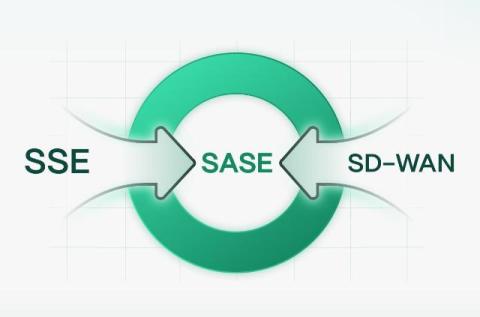
GigaOm’s latest analysis highlights a clear shift in the market. As they note, “The standalone Secure Service Edge (SSE) market has largely disappeared, with leading vendors now offering complete SASE solutions that converge software-defined wide-area network (SD-WAN) and SSE into single-vendor platforms. Organizations increasingly favor this consolidated approach to reduce operational complexity and improve visibility.”

Remote Access That Works Behind NAT, CGNAT, and Uncontrolled Firewalls

A device in your fleet encounters an issue. You try to SSH in only to discover that the IP changed overnight, the customer's firewall blocks inbound connections, and the VPN they set up six months ago stopped working when the device switched from Wi-Fi to cellular. The next several hours disappear into a Slack thread with the customer's IT team trying to get a port opened. Every engineer who has shipped hardware into a customer's environment has a version of this story.

Businesses have NO IDEA how bad AI attacks can be

There are two types of companies: those who have been compromised and those who will be. Mid and small businesses are walking into this reality without understanding what AI has changed. On The Cybersecurity Defenders Podcast, David Chernitzky, CEO and co-founder of Armour Cybersecurity, explains why the gap between how large organizations understand AI-driven threats and how smaller ones do is widening fast.

From PentestGPT to production: The state of AI-assisted offensive security with Charles Grandjean

Join us for this week's Defender Fridays as Charles Grandjean, CTO and Co-founder at Hexiagon AI, breaks down where AI-assisted pen testing actually stands today and what it means for both red teams and defenders. At Defender Fridays, we delve into the dynamic world of information security, exploring its defensive side with seasoned professionals from across the industry. Our aim is simple yet ambitious: to foster a collaborative space where ideas flow freely, experiences are shared, and knowledge expands.

Just vibe code it...

Sometimes unlimited tokens and rippin' guitar riffs can't solve every problem. The best builders know what NOT to build. Vibe coding might cut down on time, but that's only a fraction (20%) of the total software lifecycle cost. The other 70–80%? Maintenance, security patches, compliance updates. The slow grind of keeping it alive in production. When it comes to something as complex and critical as keeping your security airtight, depth wins over speed every time.

An HR Leader's Guide to Insider Risk Management

HR teams manage every stage of the employee lifecycle, from hiring and onboarding to performance management and offboarding. Security teams manage data access, behavioral monitoring, and incident response. Insider risk lives at the intersection of both. When HR and security operate independently, the gaps between them are exactly where data loss happens, and the moments of highest exposure are almost always HR events, such as a resignation submitted, a role change processed, a termination decision made.