Security | Threat Detection | Cyberattacks | DevSecOps | Compliance

How Digital Tools Are Changing the Way Businesses Manage Billing Documents?

Nowadays, billing is a lot easier and certainly more streamlined when compared to a decade ago. And the reality is, it's all thanks to digital tools. We are able to optimize the workflow, use tools that make it easier to manage every single detail, and that alone is a game-changer. Now the question is, what tools can be good for managing billing documents and how can those help you improve your overall experience? Let's find out!


Digital vs. Printed Academic Credentials: What's the Difference?

Graduation is one of the proudest days in a person's entire lifetime. Attached to the pride is the anxiety of ensuring you don't lose the piece of paper that actually proves you completed the achievement. As the world evolves, so does the way we store records. More and more often now, institutions and people are beginning to keep digital versions of important documents. Rather than photocopying a certificate and keeping it in a physical personnel file, the document is scanned directly into a digital directory for the employee.

Why most security training fails and how behavioral science can fix it

We need to face a bitter truth: Most security awareness training out there just doesn’t work the way it’s supposed to. Year after year, companies worldwide pour billions into all sorts of training programs, posters, and click-through modules, yet phishing click incident rates stubbornly persist with no sign of them fading away any time soon. So, what are we missing? According to Verizon’s Data Breach Investigations Report, the human element is involved in 62% of breaches.

What You Need to Know About Application Security for CCPA Compliance

If your organization collects personal information from California residents, you already know the California Consumer Privacy Act (CCPA) isn’t optional. What you may not fully appreciate yet is that application security for CCPA compliance isn’t really about checking boxes on a vulnerability scanner report. It’s about managing software risk at a level of rigor, continuity, and accountability that can hold up when regulators, auditors, or plaintiff attorneys come asking questions.

How to Build an AI Governance Policy for Employees

Most organizations now have an AI policy on paper. Far fewer can tell whether employees follow it. According to ISACA, 25% of organizations have no AI policy at all, and only 38% of those with one describe it as formal and thorough. Meanwhile, employees keep pasting, uploading, and delegating work to AI tools, both generative and agentic. Cyberhaven Labs found that 39.7% of employee interactions with AI tools involve sensitive data.

Manitoba school cyberattack: Another wake-up call for education

Schools depend on technology for nearly every part of their day-to-day operations, from classroom learning and communications to administrative systems. That makes the recent cybersecurity incident affecting Garden Valley School Division in Manitoba another important reminder that educational institutions need to be prepared for cyber disruption.

Why Keyboard Warriors Attack the People Who Show Up

Keyboard warriors can make online communities hostile by targeting people who put their knowledge, opinions and work into public view. The argument here is that some attacks may have more to do with the critic's own frustrations than the person they're attacking, while discouraging the diverse voices cybersecurity needs.

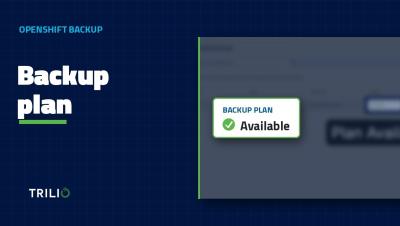
Create a Kubernetes backup plan on OpenShift | Trilio for Kubernetes

Create a backup plan for one application on OpenShift with Trilio for Kubernetes: what to protect, where to store it and when it runs, plus a cleanup policy for failed backups. You will: Best practices covered: give each application or namespace its own plan, never one plan for the whole cluster; allow deleting plans, backups and targets only to a small group of admins; keep failed backups a few days so their logs are still there for support; cleanup removes the data of failed backups, not their records.

Red Flag or Green Flag: Cybersecurity EditionUpGuard

How many red flags does your security program have? UpGuard CPO Daniel Bradbury calls out a few big ones we’re seeing right now, from banning ChatGPT to reporting a single security score to the board. If any of them hit close to home, the next UpGuard Summit is where we’re showing you how to turn those red flags green. It’s our free virtual event for security leaders, GRC practitioners and IT teams, and every session is recorded if you can’t make it live.