

Security | Threat Detection | Cyberattacks | DevSecOps | Compliance

How Hackers Steal Your Microsoft 365 Session | Sophos Threat Case

Most phishing attacks go after credentials. Evil Tokens targets something more powerful: an already authenticated Microsoft 365 session. Watch Marlene Jones break down how session theft works and how Sophos MDR stopped this real-world attack before the stolen token could be abused.

12 Best MCP Security Tools: Which Ones See Local Servers on Developer Laptops?

Model Context Protocol (MCP) servers can read your files, your tokens, and your build scripts. When a server runs as a quiet stdio process on a developer laptop, every gateway, proxy, and SIEM that inspects only HTTP traffic loses sight of it. The NSA's Artificial Intelligence Security Center covered this ground in its 20 May 2026 information sheet on MCP security design, which advises keeping data processing local where possible and separating components by trust level. Running a server locally satisfies the first point. It does nothing for the second unless somebody can see the process.

Security Integrations Break in Boring Ways: A Practical Look at Connector Development

Almost any enterprise SOC looks the same from the inside. Cloud platform. EDR. Identity provider. A couple of firewalls. A vulnerability scanner nobody fully trusts. And a SIEM that's supposed to hold it all together. Every tool works fine on its own. They just don't talk to each other. So the analyst becomes the glue. Terrible job for a person. Burns them out fast.

SMB1001 Certification in Australia: Cost, Timeline and Which Provider to Choose

SMB1001 is a cybersecurity standard that helps small and medium-sized businesses demonstrate their security controls through five certification tiers, from Bronze to Diamond. Dynamic Standards International (DSI) develops the SMB1001 standard but does not issue certificates. CyberCert, its current SMB1001 authorised certifier, manages certification and issues certificates through its digital platform.

Hardening Edge Supercomputers: Securing the Deployment of Any Compact AI Supercomputer

Edge AI systems bring data center-class computing into offices, labs, and remote facilities where environmental controls and security practices may vary. Their compact size makes deployment easier, but it also creates new risks involving physical access, local networks, software supply chains, and sensitive data. Securing these systems requires a clear plan that covers the device, its operating environment and every service connected to it.

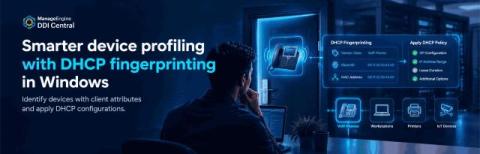
DHCP Fingerprinting in Windows: Applying Smarter DHCP Policies for Device Profiling with DDI Central

Enterprise networks host a variety of devices, from workstations and VoIP phones to printers and IoT devices. Each group may have different network configuration requirements, making it increasingly difficult to maintain consistent settings as the network grows. Microsoft DHCP policies help address this challenge by evaluating attributes in DHCP requests and applying configurations based on defined conditions.

Keeper Security Wins Seven Cyber Defense Magazine 2026 Top InfoSec Innovators Awards

Keeper Security, the leading zero-trust and zero-knowledge identity security platform, secured seven top honors in Cyber Defense Magazine’s 2026 Top InfoSec Innovators Awards, underscoring the company’s aggressive push to secure customers against emerging AI and quantum computing risks.