Security | Threat Detection | Cyberattacks | DevSecOps | Compliance

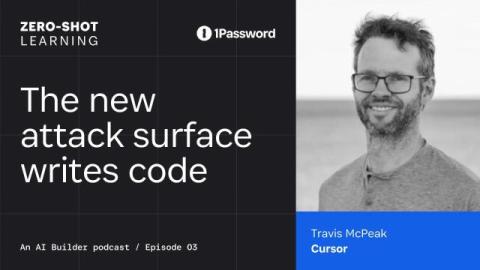
Cursor's Head of Security: Never trust the agent writing your code

"The hardest thing in security is always the chaos," according to Travis McPeak, Head of Security at Cursor. He shared this with Nancy Wang, CTO of 1Password, and Dev Tagare, Senior Director of Engineering at Google, on a recent episode of Zero-Shot Learning, the podcast about how AI gets built, secured, and deployed. "We're always going to have more that we have to be doing than we can actually do.".
Cloudflare DMARC Management is now generally available

When we first launched DMARC Management, it was driven by a simple belief: every domain on the Internet deserves strong email authentication, and cost should never be the reason it doesn't happen. As part of our mission to help build a better Internet, we made DMARC Management available for free to every Cloudflare customer. We wanted to give everyone the tools to understand and improve their DMARC posture without needing to hire an email security consultant or parse XML report files by hand.

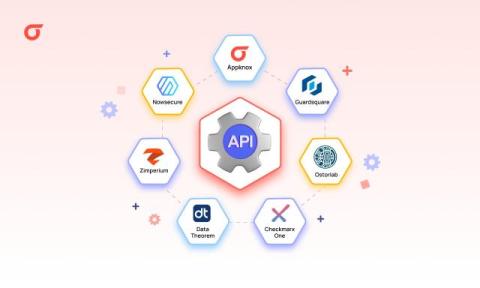
Best Mobile API Security Testing Tools for CI/CD Pipelines

Your pipeline has an API testing stage. Your scanner runs on every build. A finding list comes back clean. And then something gets exploited in production that your pipeline ran past 47 times without flagging. Here's what happened: endpoint validation passed. Security didn't. They are not the same thing. Here's what that box doesn't capture: APIs don't fail in clean test environments.

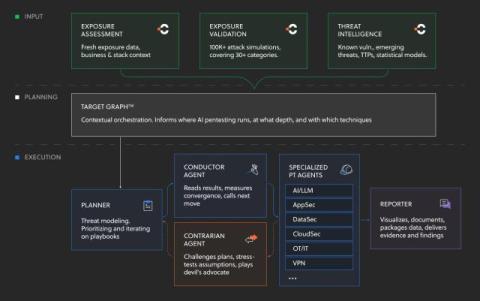
Continuous AI Pentesting: What We're Building, and What It's Already Finding

Over the past months, I’ve noticed a shift in customer conversations. Coverage, prioritization, emerging threats — those questions have given way to exposed MCP servers, unmanaged AI chatbots, and risks that don’t show up as CVEs. Mythos comes up in every other call. The calculus changed. AI now writes a quarter of production code, with twice as many vulnerabilities. The exploitation window collapsed from days to hours.

CERT-In's 12-Hour Patch Mandate: Is Your Organisation Ready to Respond at AI Speed?

CERT-In just published a risk-based remediation framework that resets expectations for every organisation operating in India. The timelines are worth reading twice: Now consider one question: if a known exploited vulnerability appeared on your internet-facing application at 11pm tonight, what would your team do in the next 12 hours?

The Role of Agentic AI in Phishing Security Training

Phishing attacks are evolving faster than traditional training programs can keep up. Advances in AI — including generative tools — are making attacks more dynamic, personalized, and harder to detect. At the same time, agentic AI for phishing security training is reshaping how programs improve, enabling them to adapt to user behavior and shifting risk in real time.

Why Agentic AI Is Finance's Biggest Security Blind Spot

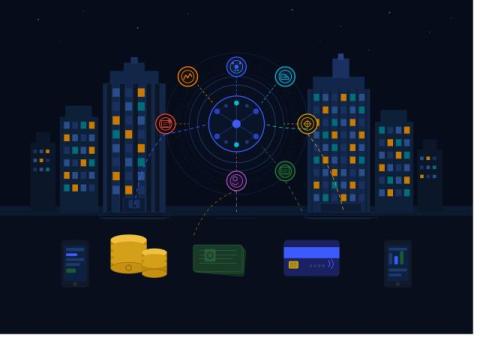
An AI agent with access to a customer’s brokerage account can begin executing trades. Not because the customer asked. Because someone, somewhere upstream, slipped a hidden instruction into a tool the agent loaded at startup. The agent is doing exactly what it was told. Just not by the customer. This is not a hypothetical. It is the attack class that financial security teams have exactly zero legacy tooling to catch and it is arriving precisely as banks accelerate their agentic AI ambitions.

Cloud Security Threats: How Prevention Cloud Protects Data

It is more important than ever to keep your data secure. Malware, ransomware, and attacks on cloud-based assets pose a constant threat to businesses as more sensitive data moves to the cloud. A report by Cybersecurity Ventures projected global cybercrime costs to reach $10.5 trillion annually by 2025. Data breaches, ransomware, fraud, and operational disruption are major contributors to cybercrime losses.

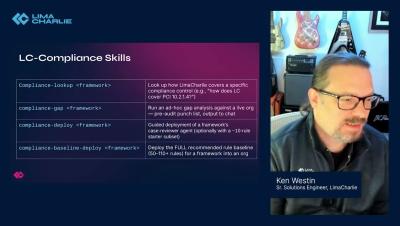
Continuous Compliance at Scale with Agentic AI

Most MSSPs are spending analyst hours on compliance work that doesn't show up on an invoice. A client comes on board with HIPAA or CMMC requirements, someone manually audits detection rules and telemetry against framework controls, documents what's missing, and builds a remediation plan. Then the next audit cycle starts and you do it again, across every tenant, every framework, every year.