Security | Threat Detection | Cyberattacks | DevSecOps | Compliance

AI Agent Security Framework on AWS EKS: Implementation Guide

You’ve enabled GuardDuty EKS Runtime Monitoring across your clusters. You’ve configured IRSA for your Bedrock-calling agents. CloudTrail is logging every bedrock:InvokeModel event. And last Tuesday, one of your AI agents exfiltrated 12,000 customer records through a sequence of API calls that every one of those tools recorded as completely normal—because at the control plane level, they were.
AI Workload Security on Azure: Evaluating Defender for Cloud Against Specialized Runtime Tools

Your SOC gets a Defender for Cloud alert: “Suspicious API call from AI workload pod.” You click through and find a LIST secrets call against the Kubernetes API server from a pod running your invoice-processing agent on AKS. The pod’s Workload Identity has Contributor access to your key vault. By the time your analyst opens the AKS Security Dashboard, the pod has been rescheduled.

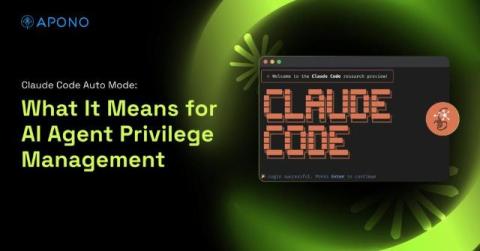
Claude Code Auto Mode: What It Means for AI Agent Privilege Management

Anthropic’s new Claude Code Auto Mode Auto Mode is generating well-deserved attention. It introduces a classifier that sits between the developer and every tool call, reviewing each action for potentially destructive behavior before it executes. It’s a real improvement over the only previous alternative to manual approval: the –dangerously-skip-permissions flag. But the announcement is also useful for a broader reason.

Securing OpenClaw Access So It Can't Go Rogue

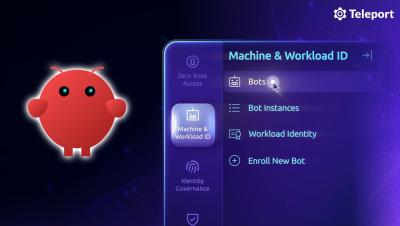
In this video, we demonstrate how to securely grant an AI agent (OpenClaw) access to Teleport-protected Kubernetes resources using Teleport Machine Identity and tbot, without exposing secrets, API keys, or long-lived tokens. You’ll see how Teleport treats AI agents as first-class identities, enforcing strict RBAC controls so the agent can only do what it’s allowed to do, like reading logs, while being blocked from sensitive actions like deleting resources or accessing secrets.

What RSAC 2026 Told Me About the Future of Cybersecurity

RSAC remains the cybersecurity event. It is where the industry gathers to compare notes, pressure-test assumptions, spot the next wave of market change and, just as importantly, build the partnerships that will shape what comes next. This year in San Francisco, that energy was unmistakable. There was real buzz across the city, from the show floor and executive meetings to the side events and industry gatherings that increasingly define RSAC week.

Session on Ghost in the Machine: Attacking Non-Human Identities in the Age of AI Agents

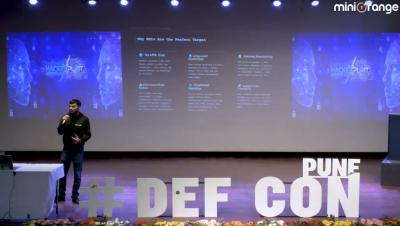
In this eye-opening talk - DEF CON Pune (DCG-9120) held at Indira Group of Institutes, Mr. Kalpesh Hiran, VP of Technology at miniOrange, exposes the hidden dangers of Non-Human Identities (NHIs) - the API keys, service accounts, OAuth tokens, and AI agents powering your infrastructure. He spoke on organizations create 92 NHIs for every human user, Yet 97% are over-privileged, lack MFA, and linger as "orphans" post-project, fueling 80% of cloud breaches.

Connect, monitor, and manage industrial machines securely online

Connecting, monitoring, and managing industrial machines securely online is a central theme in modern manufacturing and process industries. An edge gateway allows production lines, factories, and installations to be digitally connected, enabling machines, sensors, and control systems to exchange data with cloud platforms, business applications, and maintenance teams. This connection enables remote process monitoring, performance analysis, and automated interventions, as long as this is done in a controlled and secure manner.

TeamPCP: Supply Chain Attack Targets Trivy, KICS GitHub Action, and LiteLLM

Security vendors have linked recent incidents involving trusted software components to a supply chain attack campaign by TeamPCP, a cloud-focused threat actor group. The reported activity involved three widely used types of development components, which include.

What MSP and IT leaders need to know about security, compliance and AI in 2026

Artificial intelligence (AI) is transforming how organizations operate, but it’s also reshaping one of the most complex areas of IT: compliance. What was once a structured, checklist-driven process is now one that is continuous and fast-moving and that introduces new risks, dependencies and expectations. As AI adoption accelerates, so does the pressure on both managed service providers(MSPs) and IT professionals to interpret and comply with evolving regulations.