Security | Threat Detection | Cyberattacks | DevSecOps | Compliance

Best MAST Tools in 2026: Top Mobile Application Security Testing Platforms Compared

Your mobile app ships as a compiled binary to millions of devices you do not control. Anyone can decompile it, extract hardcoded secrets, reverse-engineer the logic, and exploit business-logic flaws that no automated scanner catches. Yet most security programs still treat mobile as an afterthought, running a web-focused SAST tool against mobile source code and calling it done. That approach misses platform-specific risks.

Cybersecurity Awareness Training for AI: Key Focus Areas

As employees increasingly rely on AI tools and AI agents in daily workflows, organizations are facing a new workforce security challenge: how to reduce risk without slowing productivity. Security leaders are no longer just protecting systems and identities. They also need to manage how employees interact with AI-generated content, automation, and decision support tools.

How Board Meeting Scheduling Software Eliminates the Coordination Overhead for Governance Teams

Finding two hours on nine calendars across three time zones, working around four committee sessions, two off-site obligations, and a director who is travelling for the first two weeks of the month is not an unusual governance scheduling challenge. It is a routine one. And it lands, every quarter, on the corporate secretary.

Extended-Range HDD Transmitters Compared: Depth, Frequencies, Power Modes, and Battery Life

An extended-range transmitter should give your crew more than a large depth number. The transmitter must work with your receiver, fit the housing, operate on a usable frequency, and last through the planned bore. A model that reaches farther in high power may also drain its battery within one shift. Another model may offer less maximum depth but provide more frequency options or longer runtime. This comparison covers current extended-range transmitters from Digital Control Incorporated, Subsite Electronics, and Underground Magnetics. It compares four factors.

How Organizations Can Maintain Secure Communications During Infrastructure Failures

Things like storms, hacking attempts, blackouts, broken machines, or connection problems might break essential systems. If messages can't get through, companies struggle to run smoothly, keep data safe, or stay on track. In those moments, clear and protected contact matters more - mistakes creep in when people aren't sure what's happening. Being ready ahead of time helps teams keep talking, working, and supporting others - even when surprises hit.

Why PDF-to-Video Conversion Is Becoming Standard Practice in Compliance and Risk Teams

Most compliance documents don't get read. Risk managers and compliance officers know this - the annual policy updates, the security awareness reminders, the regulatory change summaries that go out as PDFs and are opened by 12% of the organization. The people who most need to understand the content are exactly the ones who find dense text formats least accessible. This isn't a motivation problem. It's a format problem. And PDF to video conversion is one of the more practical solutions that's gained traction in risk and compliance teams over the past two years.

Securing ChatGPT, Copilot, and Gemini: A Practical Guide for Enterprise Security Teams

ChatGPT, Copilot, and Gemini are already part of daily work in many companies. People use them to draft text, summarize notes, review code, and move faster on routine tasks. That speed is useful, but it also opens a new path for data to move in ways security teams may not see at first. This guide looks at the most common risks, the controls that matter, and the simple steps that help teams keep AI use safe without slowing work down. It is built for people who need clear answers, not a pile of jargon.

mTLS for AI Agents

AI agents are increasingly accessing APIs, databases, SaaS applications, MCP servers, and other services without human intervention. As these autonomous systems become part of enterprise infrastructure, organizations need reliable ways to verify their identity before granting access to sensitive resources. Traditional authentication methods such as API keys and bearer tokens were designed for applications and users, not autonomous agents operating continuously across distributed environments.

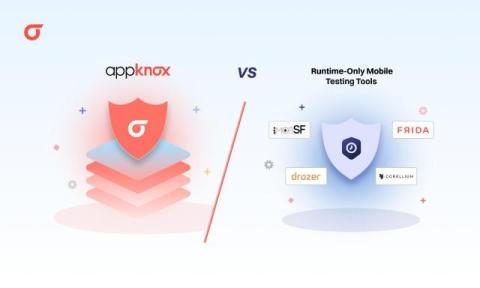
Appknox vs Runtime-Only Mobile Testing Tools: What Dynamic Analysis Cannot See Before the App Runs

Frida hooks into your app's running process in seconds. It intercepts API calls, dumps the keychain, bypasses SSL pinning, and reveals exactly what the app does at runtime. Frida is also the tool attackers use to do the same things to your users. Runtime testing tells you what happens when an app runs under test conditions. It does not tell you whether the app can resist those same tools when an attacker uses them in production. That answer is not in the runtime session. It is in the binary.

Americans Lost $900 Million to AI-Powered Scams Last Year

The US Federal Bureau of Investigation (FBI) warns that Americans lost just under $900 million to AI-powered scams in 2025, Malwarebytes reports. Total reported losses to scams last year reached nearly $21 billion, a 26% increase from 2024. The researchers note that the true losses are likely much higher, since many attacks go unreported. “The main drivers behind the rise in AI-powered scams are voice cloning, deepfake images and videos, and AI‑generated scripts,” Malwarebytes says.