
Security | Threat Detection | Cyberattacks | DevSecOps | Compliance

Secure Data Sharing: Best Practices for Privacy and Compliance

Data sharing creates business value only when organizations can control where data goes, who can use it, and what happens after it leaves its original system. That becomes harder as businesses exchange customer records, financial information, healthcare data, and AI-ready datasets across employees, vendors, applications, and regions. The answer is not simply sending files through an encrypted channel.

CrowdStrike Falcon Guardian Defines the Next Generation of AI Security

AI has rapidly evolved into a technology that takes action. AI agents can reason, access enterprise systems, and execute tasks autonomously at machine speed, often with the full permissions of the users they serve. As these agents proliferate across the enterprise, organizations need to understand where they operate, what they do, what they can access, and how to stop threats before they become breaches. This shift demands a new approach to AI security.

DIFC Regulation 10: AI system certification requirements orgs need to know

Accelerating security solutions for small businesses‍ Tagore offers strategic services to small businesses. A partnership that can scale‍ Tagore prioritized finding a managed compliance partner with an established product, dedicated support team, and rapid release rate. Standing out from competitors‍ Tagore's partnership with Vanta enhances its strategic focus and deepens client value, creating differentiation in a competitive market.

Defending against AI-fueled social engineering

Social engineering has always been the softest edge of enterprise defense, and AI is sharpening adversaries’ attacks. Phishing, business email compromise, and impersonation still dominate the initial-access playbook, but AI has stripped out the cost, time, and skill barriers that once forced attackers to choose between reach and precision.

Three Frameworks, Three Definitions of AI Risk

Cross-mapping tables for AI evidence in life sciences already exist and are broadly right. Data integrity practice lines up against data governance requirements, software lifecycle logs against technical documentation and logging, human review checks against human oversight duties, post-market surveillance against post-market monitoring. Build one repository, present it two ways. ‍ All of that is sound and it starts one step too late.

7 Best Practices for Implementing API Governance

API governance is the framework of policies, standards, and controls an organization applies to how APIs are designed, exposed, accessed, and monitored. It answers four questions for every API in your environment: who owns it, what data it touches, who can call it, and whether its behavior stays within approved limits.

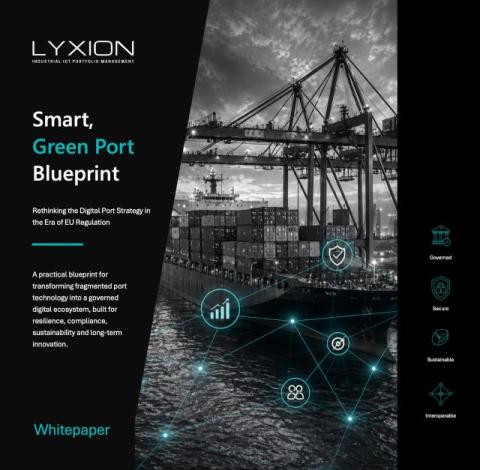
Building the foundation for the Smart, Green Port

Ports are becoming increasingly digital. Sensors, connected equipment, private networks, IoT platforms, analytics, digital twins and AI are creating new opportunities to improve efficiency, resilience and sustainability. But adding more technology does not necessarily make a port smarter. Many ports already operate hundreds or thousands of connected assets across multiple systems, suppliers and stakeholders.

Digital Resilience Becomes the Core of Business Stability

Companies now judge their strength not by how quickly they grow, but by how effectively they recover when systems fail. A single outage, ransomware attack, or supply chain disruption can freeze operations for hours or days, draining revenue and eroding customer trust. In 2026, digital resilience shifted from an IT matter to a boardroom priority, guiding how leaders plan budgets and build teams. The goal is no longer to prevent every incident, which is impossible, but to keep essential functions running through turbulence. Firms valuing recovery as strategy outperform reactive rivals.

How Drone Data Security Is Becoming Non-Negotiable for Critical Infrastructure Inspections

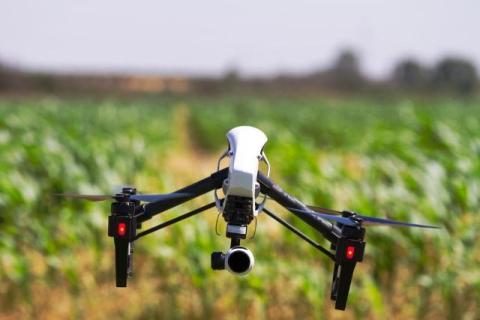
Infrastructure inspections used to mean a crew with clipboards, a bucket truck, and a lot of guesswork. Now it means a drone circling a substation, capturing LiDAR point clouds, thermal signatures, and centimeter-accurate geospatial data in a single flight, an approach Drone as a Service (DaaS) and similar operators have helped bring into the mainstream. That shift solved a lot of old problems. It also created a new one that most operators haven't fully priced in: what happens to all that data once the drone lands.