Security | Threat Detection | Cyberattacks | DevSecOps | Compliance

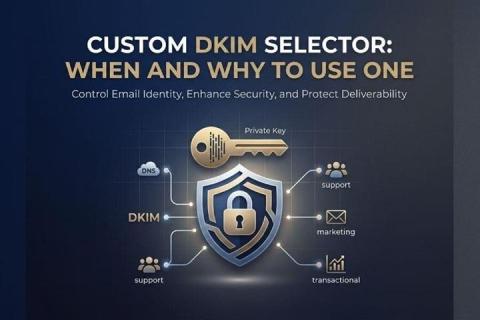
Custom DKIM Selector: When And Why To Use One

A DKIM selector is a label used by DomainKeys Identified Mail to locate the correct public key in DNS during the email authentication process. DKIM works by adding a DKIM signature to outgoing messages. That digital signature is created with a private key controlled by the sending service, while receiving systems use the matching public key published in your DNS records to validate the message.

Unauthorized Drones at Stadiums: a Security Checklist for Major Event Venues

Unauthorized drones have been a persistent security planning challenge for stadiums, arenas, and major event venues in recent years. A single UAS near or over a packed venue can disrupt operations, trigger public safety concerns, delay programming, or force security teams into fast decisions in a complex environment.

Can a Digital Yearbook Include Photos, Videos, and Student Messages?

If you have ever managed a school yearbook committee, you know the drill. You spend months chasing down photos, formatting spreads, and arguing over page counts because every extra piece of paper drives up the printing cost. The print budget dictates everything. But when a school decides to move away from print, the entire rulebook changes.

Data Privacy in Sports: How Secure Is Team Software?

Modern sports teams rely heavily on digital applications to manage their daily operations. Athletes trust platforms with their private profiles, performance metrics, and medical data every day. Guarding digital information requires serious attention from managers and tech developers. Weak protection can easily compromise the sensitive details of entire rosters and leak strategic plans.
Featured Post

AI in the UK: Driving Innovation Without Expanding Cyber Risk

Artificial intelligence is no longer a future ambition for UK organisations. It is already shaping how decisions are made, how services are delivered, and how quickly businesses can respond to change. From automation and analytics to customer engagement and operational optimisation, AI is becoming an integral part of the modern enterprise.

How Weak AI Governance Increases Organizational Exposure to Risks

‍ Artificial intelligence (AI) is transforming businesses rapidly, but weak AI governance creates significant risks. Without proper oversight, organizations face costly data breaches, operational failures, and damage to their reputation. This article explains why strong AI governance is essential to managing these risks.

SSO for AI Agents: The Identity Gap No One is Talking About

Single Sign-On (SSO) means fewer password headaches, faster access, and better security for human users. But the same cannot be said for AI agents. SSO, a core part of Identity and Access Management (IAM), which was initially built for humans, can no longer be used for AI agents. For humans, it was quite simple - just log in once, and authenticate across connected apps. However, when an AI agent tries to authenticate the same way, the traditional access model breaks fast.

AI Security for Healthcare: How to Protect PHI When Employees Use GenAI Tools

Clinicians are pasting patient summaries into ChatGPT to draft discharge instructions. Billing staff are uploading claim data to AI writing tools to speed up appeals letters. Nurses are using consumer AI assistants to look up drug interactions between patient visits. None of this was approved by the security team, and most of it would surprise the compliance officer.

Introducing the Wallarm AI Control Platform: One closed loop for AI security and API security.

Every week, someone in your organization stands up an AI service. Maybe they told security about it, but probably not. By the time it shows up in your inventory, it has been running for weeks, processing data, calling external APIs, and doing things nobody formally reviewed.