
Security | Threat Detection | Cyberattacks | DevSecOps | Compliance

Zombie APIs Are Costing You More Than You Think: A Risk Quantification Guide

Zombie APIs are API versions or endpoints that were once known and documented, but were never properly retired. A team ships v2 of an API, tells everyone to migrate, and assumes v1 is dead. In reality, v1 is still running on a server somewhere, still accepting requests, and still connected to production data. This is different from unmanaged APIs, which were never documented in the first place. Zombie APIs were documented once.

Aikido Security achieves ISO 42001:2023 certification for AI governance

Aikido Security has achieved ISO 42001:2023 certification, the international standard for AI management systems, a step few security vendors have taken so far. The certification confirms that Aikido runs a structured, continuously improving governance system for managing the risks introduced by its AI-enabled features, across our entire platform.

Aikido launches agentic pentesting for Android apps

TL;DR: Aikido now pentests Android apps. The same agents that test your web apps and APIs can now work through your APK, log into the app, and reason through it, alongside the backend it talks to, in a single assessment. Findings come back with reproduction steps and are ready for an AutoFix, the same as any other Aikido pentest. Aikido has been running autonomous pentests against web apps and APIs since November 2025.

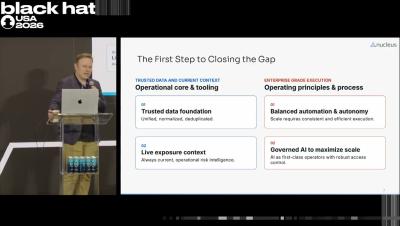
From Findings to Fixes: AI Alone Isn't Enough | Scott Kuffer | Black Hat USA 2026

Everyone is talking about using AI to fight AI. But when it comes to vulnerability management, is that really the answer? In this presentation from Black Hat USA 2026, Nucleus Security Co-founder and Chief Product Officer Scott Kuffer challenges the industry's growing obsession with AI-first security outcomes and explains why organizations need more than autonomous agents, AI-generated prioritization, and endless vulnerability discovery to reduce risk.

The Double Edge of AI in Healthcare: Guarding Data, Growing Empathy

Healthcare has always run on two currencies: information and trust. Patients hand over their most sensitive data, diagnoses, genetic profiles, mental health histories, on the assumption that it will be protected and that the people (or systems) handling it will treat them with care. Artificial intelligence is now reshaping both sides of that bargain at once.

What Is Data Loss Prevention (DLP)? Types, Use Cases, and Best Practices

Protecting sensitive data is no longer just a compliance objective. It has become a prerequisite for adopting cloud services, enabling AI, and maintaining customer trust. Yet many organizations still struggle to balance innovation with effective data governance. A 2025 Forrester Total Economic Impact study commissioned by Microsoft found that organizations using mature data protection capabilities, including data loss prevention (DLP), achieved a 30% reduction in the likelihood of data breaches.

Coding Agents Just Reopened Your Software Supply Chain Blind Spot

Most organizations spent years hardening their software supply chain. The model is familiar: dependencies flow through a controlled repository, policies determine what is allowed, scanning catches what slips through, and every action is logged for auditability. It works because human developers operate within environments that enforce these rules. AI coding agents break that assumption entirely.