As global network infrastructure expands to include devices without traditional compute power, every organization’s attack surface becomes increasingly complex. Parallel to the increased complexity in the threat landscape is the increased scale and complexity of the signals and data necessary to produce meaningful cybersecurity insights. At its core, cybersecurity is a big data problem, requiring centralization of disparate data sources in uniform structure to enable continuous analytics.
We are pleased to announce that Netskope Private Access (NPA) is now available to test drive, meaning you can experience a truly modern zero trust network access (ZTNA) solution firsthand with no commitment and no software to download or install. Selecting and implementing the right ZTNA solution is a crucial part of the SASE journey, and our goal is to make your process of evaluating Netskope Private Access as easy as possible.
Devo recently announced that it has entered into a strategic collaboration agreement with Amazon Web Services (AWS). This is a significant milestone for Devo and great news for our mutual customers with AWS. We caught up with Tony Le, cloud partnerships director, to take a deeper dive into what this means and how the collaboration will benefit our users in the long run.
Cloud data storage has many practical advantages over traditional data centers, but making a move also comes with many unique security considerations. When moving to AWS, begin how you wish to continue. Companies that transition to cloud data storage must update their approach to information security to protect their data. Setting up proper security practices during migration will help future teams securely and efficiently deliver applications and features.
As organizations are increasingly moving their workloads to the cloud, cloud security is becoming more important than ever.
As organizations are rapidly moving to the cloud to leverage the cloud advantage, services are also moving to the cloud, including cybersecurity solutions such as SIEM. In fact, SIEM as a Service is rapidly gaining momentum as an alternative to traditional, on-premises SIEM solutions. In its 10 Questions to Answer Before Adopting a SaaS SIEM report, Gartner had predicted that by 2023, 80% of SIEM solutions will have capabilities that are delivered via the cloud.
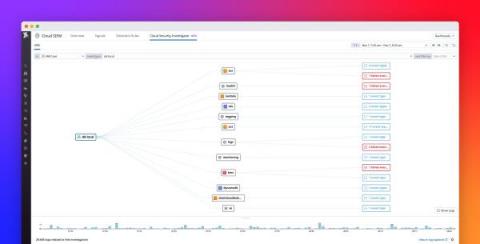
Investigating the origin of activity in cloud-native infrastructure—and understanding which activity is a potential threat—can be a challenging, time-consuming task for organizations. Cloud environments are complex by nature, comprising thousands of ephemeral, interconnected resources that generate large volumes of alerts, logs, metrics, and other data at any given time.