Security | Threat Detection | Cyberattacks | DevSecOps | Compliance

SafeBreach Coverage for US CERT AA24-249A (GRU Unit 29155)

On September 5th, the Federal Bureau of Investigation (FBI), Cybersecurity and Infrastructure Security Agency (CISA), and National Security Agency (NSA) issued an urgent advisory warning security teams about efforts undertaken by threat actors affiliated with Russia’s General Staff Main Intelligence Directorate (GRU) 161st Specialist Training Center (Unit 29155).


What security lessons can you learn from your attack surface score?

Increasing digitalization and connectivity mean the attack surfaces of most organizations are growing. This means more IT assets to track and manage, plus more potential attack routes for threat actors to target. The threat situation is constantly increasing, especially in the area of vulnerabilities – last year over 30,000 new vulnerabilities were published. So how can you get an accurate view of your attack surface and where it might be open to exploitation?

Lost in Translation: Vulnerability Management Communication Gaps

Vulnerability management is absolutely critical to protecting an organization’s IT and cloud infrastructure, systems, or applications from incoming threats. The ability to remediate the most relevant vulnerabilities quickly is the only way to keep your perimeter safe. Yet, security teams struggle with managing vulnerabilities. Why? At the core lies a fundamental communication and collaboration problem.

CVE-2024-7261: Critical OS Command Injection Vulnerability in Zyxel APs and Security Routers

On September 3, 2024, Zyxel released patches for a critical OS command injection vulnerability, identified as CVE-2024-7261, affecting Access Points (APs) and security routers. This vulnerability stems from improper handling of special elements in the “host” parameter within the CGI program of certain AP and router versions, potentially allowing an unauthenticated attacker to execute OS commands by sending a specially crafted cookie to the vulnerable device.

CVE-2024-20439 & CVE-2024-20440: Critical Cisco Smart Licensing Utility Vulnerabilities

On September 4, 2024, Cisco released fixes for two critical vulnerabilities in Cisco Smart Licensing Utility (CSLU), a tool used to manage licenses across Cisco products in a network. Cisco has stated that these vulnerabilities are only exploitable if the Smart Licensing Utility is actively running and has been started by a user. Note: These vulnerabilities do not impact Cisco’s Smart Software Manager On-Prem or Satellite.

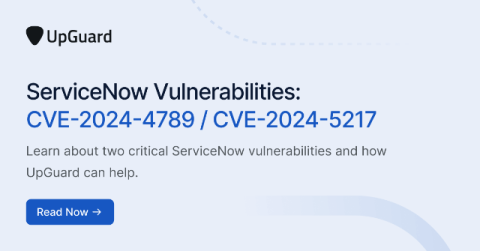
ServiceNow Vulnerabilities: CVE-2024-4789 and CVE-2024-5217

In late July 2024, the US Cybersecurity and Infrastructure Security Agency (CISA) added two critical vulnerabilities (CVE-2024-4789 and CVE-2024-5217) affecting ServiceNow to its list of known exploited vulnerabilities. These vulnerabilities can allow unauthenticated users to execute code remotely, posing severe risks to organizations that use the platform. The potential for unauthorized access and severe data breaches makes addressing these vulnerabilities crucial.

Ethical Hacking vs. Vulnerability Assessment: Understanding the Differences

In the dynamic field of cybersecurity, two essential practices stand out: Ethical Hacking and Vulnerability Assessment. Both play critical roles in safeguarding digital assets, yet they serve different purposes and employ distinct methodologies. Understanding the differences, their place in cybersecurity, and when to deploy each tactic is crucial for maintaining a robust security posture.

5 Ways a Network Digital Twin Can Revolutionize CVE Compliance

In the rapidly evolving cybersecurity landscape, the sheer volume of Common Vulnerability and Exposure (CVE) notices has become a daunting challenge for SecOps teams. In 2023 alone, the National Institute of Standards and Technology (NIST) issued 28,901 CVE notices, reflecting the growing complexity and intensity of potential threats.