Security | Threat Detection | Cyberattacks | DevSecOps | Compliance

Call for action: Exploring vulnerabilities in Github Actions

To address the need for streamlined code changes and rapid feature delivery, CI/CD solutions have become essential. Among these solutions, GitHub Actions, launched in 2018, has quickly garnered significant attention from the security community. Notable findings have been published by companies like Cycode and Praetorian and security researchers such as Teddy Katz and Adnan Khan.


Talk to us about Snyk CLI

At the end of April 2024, we introduced Semantic Versioning and release channels to Snyk CLI, changes that were well received by our customers. Building on that momentum, we aim to design the CLI so that it not only helps you do your job well but also brings you joy in doing so. We invite you to accompany us on this path to discover together. In today’s blog post, Neil and I, the design and product duo for Snyk CLI, will share the following three things with you.

Active Exploitation Observed for Linux Kernel Privilege Escalation Vulnerability (CVE-2024-1086)

Last week, CISA added CVE-2024-1086 to its Known Exploited Vulnerability Catalog. CVE-2024-1086, a use-after-free vulnerability in the Linux kernel’s netfilter, was disclosed on January 31, 2024 and assigned a CVSS of 7.8 (High). If successfully exploited, it could allow threat actors to achieve local privilege escalation. While there was no evidence of active exploitation at the time of disclosure, we have since observed adversaries targeting CVE-2024-1086 in the wild.

7 Types of exposures to manage beyond CVEs

As cybersecurity leaders try to get ahead of threats to their organization, they're increasingly seeking ways to get off the hamster wheel of chasing countless CVEs (common vulnerabilities and exposures). The brass ring that most CISOs reach for today is prioritization of exposures in their infrastructure (and beyond), so their teams can focus on tackling the ones that present the greatest risk. In some cases, the highest priority exposures will still be critical CVEs on mission critical assets.

Securing next-gen development: Lessons from Trust Bank and TASConnect

Today, the average application contains thousands of moving parts. Organizations deploy to multi-cloud environments with containers and microservices, using a combination of code written by internal teams, generated by AI, and curated by third parties. Security teams face a tall order in keeping these complex applications secure, especially given the increasing number of software supply chain attacks.

An Introduction To Purple Teaming

With cyber threats constantly evolving, organizations must ensure that their approach to identifying and mitigating vulnerabilities is always up to date. Purple teaming can play a vital role in helping them to achieve this. Purple teaming involves red and blue teams collaborating on an ongoing basis to maximize their impact. Read on to discover how purple teaming enables businesses to enhance and accelerate their approach to identifying and mitigating security vulnerabilities.

Operation Grandma: A Tale of LLM Chatbot Vulnerability

Who doesn’t like a good bedtime story from Grandma? In today’s landscape, more and more organizations are turning to intelligent chatbots or large language models (LLMs) to boost service quality and client support. This shift is receiving a lot of positive attention, offering a welcome change given the common frustrations with bureaucratic delays and the lackluster performance of traditional automated chatbot systems.

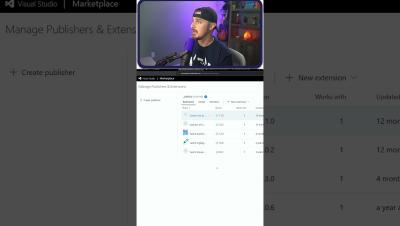
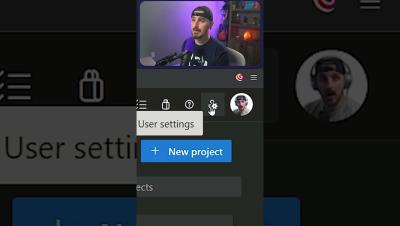
How to Create Azure DevOps Organization and VS Code Personal Access Token (Visual Studio Code)

Watch the full video for more... About Snyk Snyk helps you find and fix vulnerabilities in your code, open-source dependencies, containers, infrastructure-as-code, software pipelines, IDEs, and more! Move fast, stay secure.