Security | Threat Detection | Cyberattacks | DevSecOps | Compliance

HTTP/2 Rapid Reset

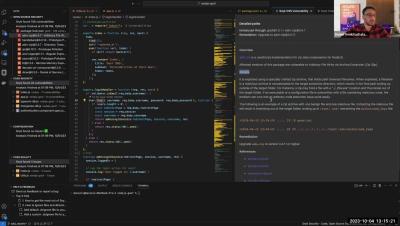
A recent vulnerability tracked as Rapid Reset (CVE-2023-44487) in the HTTP/2 protocol was recently disclosed by researchers and vendors. It was exploited in the wild from August 2023 to October 2023. The issue arises from the HTTP/2 protocol's ability to cancel streams using an RST_STREAM frame, which can be misused to overload servers by initiating and quickly canceling numerous streams, circumventing the server's concurrent stream limit.

CVE-2023-38545: High Severity cURL Vulnerability Detection

On October 11 a new version of curl (8.4.0) was released, where a couple of new vulnerabilities were fixed (CVE-2023-38545 with severity HIGH and CVE-2023-38546 with severity LOW). These issues were previously announced in the project’s discussion. At the time of this blog, there have been several proof of concepts released for CVE-2023-38545 which result in crashes, but not exploitation.

Cato's Analysis and Protection for cURL SOCKS5 Heap Buffer Overflow (CVE-2023-38545)

TL;DR This vulnerability appears to be less severe than initially anticipated. Cato customers and infrastructure are secure. Last week the original author and long-time lead developer of cURL Daniel Stenberg published a “teaser” for a HIGH severity vulnerability in the ubiquitous libcurl development library and the curl command-line utility. A week of anticipation, multiple heinous crimes against humanity and a declaration of war later, the vulnerability was disclosed publicly.

Phishing and Curling: Vulnerabilities, not Winter Sports

In this week's episode, Bill and Robin dive into the dangers of EvilProxy, as well as discuss a hot new vulnerability in the curl framework (CVE-2023-38545) Should you be concerned about this CVE? How can you tell if personal parameters are being sent to threat actors? and how can you help mitigate against these security challenges? Learn all this and more on the latest episode of The Ring of Defense!

What is a Zero-Day (0-Day)?

In the world of cybersecurity, zero-day vulnerabilities, zero-day attacks, and zero-day exploits keep many CISOs up at night. These terms, often shrouded in mystery and intrigue, denote a significant risk to digital systems and the sensitive data they hold. Understanding the intricacies of zero-day vulnerabilities and the exploits that leverage them is crucial for individuals, organizations, and governments seeking to fortify their defenses against cyber threats.

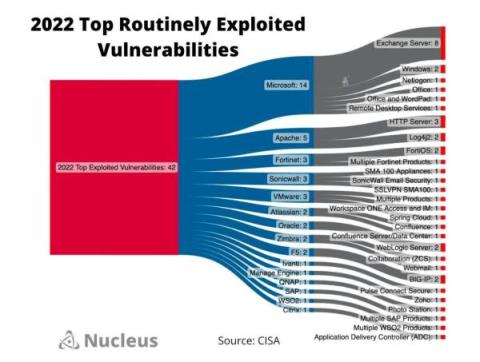
A Look at CISA's Top Routinely Exploited Vulnerabilities

Knowing what vulnerabilities interest malicious actors is a critical step in assessing the risk of vulnerabilities found in your environment. On August 3rd, CISA released their Top Routinely Exploited Vulnerabilities report for the year 2022 and inside comes little surprise as to most of the culprits. Bugs tied to ransomware incidents continue to dominate the eyes of the agencies behind these joint advisories in hopes that the number of complete owns will diminish.

The State of Citrix Zero-Day Vulnerabilities 2023

Critical zero-day Citrix CVE-2023-3519 is still being exploited two months after Citrix released a patch. IONIX research found that 19% of the CVE-2023-3519 vulnerabilities are still unmitigated in comparison to only 3% among IONIX customers. In addition, IONIX customers were able to resolve this critical risk three times faster.

Top 10 Docker Vulnerability Scanners for 2023

Docker has revolutionized how developers work by offering a powerful platform for creating, shipping, and running container applications. It helps developers conquer the complexity of application development and significantly increases software shipping frequency. Despite setbacks in recent years, Docker brings home $50 million in revenue every year, driven by the ongoing demand for new applications.