
Security | Threat Detection | Cyberattacks | DevSecOps | Compliance

All Cloudflare Customers Protected from Atlassian Confluence CVE-2023-22515

On 2023-10-04 at 13:00 UTC, Atlassian released details of the zero-day vulnerability described as “Privilege Escalation Vulnerability in Confluence Data Center and Server” (CVE-2023-22515), a zero-day vulnerability impacting Confluence Server and Data Center products. Cloudflare was warned about the vulnerability before the advisory was published and worked with Atlassian to proactively apply protective WAF rules for all customers.

Priorities from the OpenSSF Secure Open Source Software Summit 2023

Snyk has been a long-time active participant in and sponsor of the Open Source Security Foundation (OpenSSF). We’re there because we believe in supporting its mission of securing the open source ecosystem. A recent summit meeting convened by the OpenSSF with the White House brought together various US Government departments for a chat about open source security.

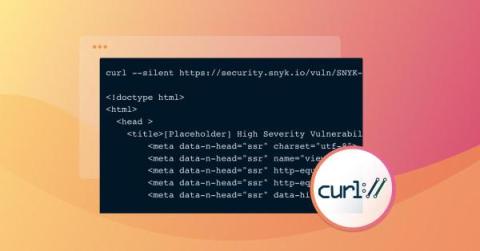
High severity vulnerability found in libcurl and curl (October 2023)

On October 3, 2023, Daniel Stenberg, the long-time curl maintainer and original author, published a note on both LinkedIn and X (formerly Twitter) regarding the shipping of curl version 8.4.0, which will contain a fix for "probably the worst security problem found in curl in a long time." This issue should be taken seriously as curl maintainers have been vocal about downplaying the risk associated with most vulnerabilities reported against curl in the past (a recent example is the article CVE-2020-1990

Using Runtime Insights with Docker Scout to Prioritize Vulnerabilities

The cloud revolution has firmly taken hold, and businesses of all sizes are adopting cloud-native technologies. This new paradigm has also created newer attack surfaces for cybercriminals, who are eager to exploit known security gaps in cloud environments. Sysdig is collaborating with Docker to deliver a more efficient process for identifying risks and opportunities for accelerated remediation in Docker Scout using runtime insights.

Rhadamanthys malware analysis: How infostealers use VMs to avoid analysis

The infostealer malware Rhadamanthys was discovered in the last quarter of 2022. Its capabilities showed a special interest in crypto currency wallets, targeting both wallet clients installed in the victim’s machine and browser extensions. The main distribution methods observed for this threat are fake software websites promoted through Google Ads, and phishing emails, without discriminating by region or vertical.

Announcing IaC+ early access: Secure your infrastructure configurations across the SDLC

Designing and maintaining secure infrastructure configurations from code to cloud is a complex process involving multiple technical teams and security stakeholders. The first challenge is writing secure infrastructure configurations pre-deployment.

Does AI lead to AppSec hell or nirvana?

The use of artificial intelligence in every area of life — from writing papers to maintaining critical infrastructure to manufacturing goods — is a controversial topic. Some are excited about the possibilities that come with AI/ML tech, while others are fearful and reticent. These differing opinions raise a fundamental question: will AI turn our modern-day society into a utopia or a dystopia?

CVE-2023-4863: Critical Vulnerability in Widely Used libwebp Library

On September 7, 2023, Apple released emergency security updates to fix a buffer overflow vulnerability (CVE-2023-41064) impacting macOS, iOS, iPadOS, and watchOS products that was used in a zero-click exploitation chain by the NSO Group. Shortly after, on September 11, 2023, Google released an update to fix a buffer overflow vulnerability (CVE-2023-4863) in Google Chrome, which was reported by Apple’s Security Engineering and Architecture (SEAR) and Citizen Lab.

CVE-2023-40044, CVE-2023-42657: Two Critical Vulnerabilities Impacting Progress WS_FTP Server

On September 27, 2023, Progress Software released a security advisory detailing multiple vulnerabilities in their WS_FTP Server product, including two with a critical severity rating. CVE-2023-40044 (CVSS 10) is a deserialization vulnerability that affects the Ad Hoc Transfer module and could allow a threat actor to obtain remote code execution if successfully exploited.

CVE-2023-42115: Critical RCE Vulnerability in Exim

On October 2, 2023, Exim released security fixes for an out-of-bounds write remote code execution (RCE) vulnerability (CVE-2023-42115, CVSS: 9.8). This vulnerability affects the Simple Mail Transfer Protocol (SMTP) service and is caused by improper validation of user input. A threat actor can remotely exploit CVE-2023-42115 by writing data beyond the boundaries of a buffer, which leads to the execution of arbitrary code.