Security | Threat Detection | Cyberattacks | DevSecOps | Compliance

Announcing Our Partnership with Wiz: Seal Hardened Base Images Now Seamlessly Integrated in Wiz

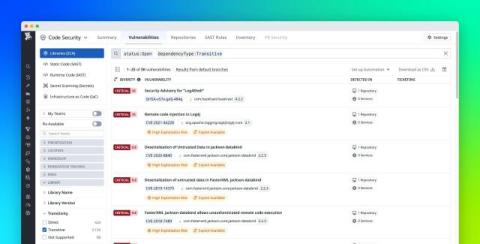
Security teams can now eliminate container vulnerabilities at the source without developer effort or version upgrades. At Seal Security, we believe vulnerability management should start with secure foundations.That’s why we’re excited to share that Seal’s pre-patched packages to harden base and secure images are now officially integrated in Wiz. This partnership brings together Wiz’s best-in-class cloud visibility with Seal’s remediation-first approach to container security.

CVE-2025-25249: Remote Code Execution Vulnerability in FortiOS and FortiSwitchManager

On January 13, 2026, Fortinet released an advisory describing a high-severity remote code execution vulnerability affecting its FortiOS and FortiSwitchManager products. According to Fortinet, the vulnerability stems from a flaw in the CAPWAP Wireless Aggregate Controller Daemon and could allow an unauthenticated, remote threat actor to execute arbitrary code or commands. The vulnerability was discovered internally by Fortinet’s Product Security Team.

Sensitive Data Is the Common Thread Across Most OWASP Top 10 Issues. Here's Why

The OWASP Top 10 is usually presented as a list of technical failures. Broken access control. Injection. Insecure design. Misconfiguration. Each category points to something that went wrong in the application. What it doesn’t say explicitly is what was actually at risk when it went wrong. In most real incidents, the answer is not “the application.” It’s the data inside it. Sensitive data is the reason attackers care about OWASP failures in the first place. Credentials.

CVE-2025-69258: Trend Micro Apex Central Remote Code Execution Vulnerability

On January 7, 2026, Trend Micro released a critical patch for Apex Central on-premises versions below Build 7190, addressing multiple vulnerabilities. The most severe of the vulnerabilities disclosed is CVE-2025-69258, a critical severity vulnerability, which allows unauthenticated threat actors to load malicious DLLs and execute arbitrary code as SYSTEM without user interaction. The advisory also includes two medium-severity denial-of-service vulnerabilities, CVE-2025-69259 and CVE-2025-69260.

A New Era for AI Coding? GPT 5.2 vs. Security Vulnerabilities

Can OpenAI’s GPT 5.2 actually build a production-ready, secure application from a single prompt? In this video, we put the latest model to the test by asking it to build a full-stack Node.js note-taking app. We evaluate its dependency choices, dive into a surprising fix for a long-standing CSRF vulnerability, and run a full security audit using Snyk. Is this the new gold standard for AI coding models?

Critical jsPDF Vulnerability Enables Arbitrary File Read in Node.js (CVE-2025-68428)

In January 2026, a critical security vulnerability was disclosed in jsPDF, a popular JavaScript library used to generate PDF documents. The issue, tracked as CVE-2025-68428, affects server-side Node.js deployments of jsPDF prior to version 4.0.0 and has been assigned a CVSS score of 9.2. The vulnerability is a path traversal issue that can be abused to read arbitrary files from the local filesystem.

CVE-2026-21858: Critical Unauthenticated File Access Vulnerability in n8n "Ni8mare"

On January 7, 2026, fixes were released for a maximum severity vulnerability (CVE-2026-21858) impacting n8n, a workflow automation application primarily used with artificial intelligence. Labeled “Ni8mare” by the researchers who discovered it, the vulnerability allows unauthenticated remote threat actors to take over locally deployed instances via publicly accessible webhook and form endpoints.

Beyond Detection: Building a Resilient Software Supply Chain (Lessons from the Shai-Hulud Post-Mortem)

The Shai-Hulud npm supply chain incident was a wake-up call for the industry. The attack involved malicious packages containing hidden exfiltration scripts that targeted developers’ machines and CI environments. At Snyk, we watched this incident unfold in real-time, observing how quickly attackers can pivot from one compromised credential to a full-scale ecosystem infection.

How OWASP Top 10 Maps to Data Exposure Risks: 5 Hidden Threats Explained

Most teams learn the OWASP Top 10 as a list of application security failures. Injection flaws. Broken access control. Security misconfiguration. Items to scan for, remediate, and close before the next audit or penetration test. But data exposure rarely arrives neatly packaged as a single OWASP finding. When sensitive data leaks, it is almost never because one category failed in isolation.