Security | Threat Detection | Cyberattacks | DevSecOps | Compliance

How to prevent known exploited vulnerabilities at the endpoint

The US Cybersecurity and Infrastructure Agency (CISA) has issued a directive to federal agencies and other public bodies requiring them to take steps to reduce their risk of exploited vulnerabilities. CISA highlights the startling finding that hackers are exploiting up to 290 different vulnerabilities in these agencies.

WhiteSource Research: Fixing Vulnerable npm Packages Quickly and Painlessly

Over the past few years organizations have been shifting security tools and practices left to ensure that application security is addressed from the earliest stages of the software development life cycle (SDLC). These efforts also increasingly cover open source components, which comprise up to 80% of our software products.

New Exchange RCE vulnerability actively exploited

Exchange admins now have another exploit to deal with despite still reeling from a number of high profile attacks this year including ProxyLogon and ProxyShell. A new high severity Remote Code Execution (RCE) exploit for on-premise Exchange Servers has been published and is being actively exploited in the wild.

ManageEngine Vulnerability Manager Plus simplifies compliance with the CIS Benchmarks

New software and assets introduced into your network are, by default, configured to be multifunctional and convenient to use, but they’re not always the most secure. IT teams also make constant changes to systems’ configurations, leading to inevitable security gaps. Maintaining secure configurations in assets and software is essential for organizations that want to avoid potential cyberattacks or face costly audit penalties.

Announcing automated fixes for vulnerabilities in .NET dependencies

We’re pleased to announce improved support for.NET applications in Snyk Open Source, allowing developers to fix vulnerabilities in.NET dependencies with the help of actionable advice and automated pull requests! As of the time of writing, NuGet, the Microsoft-supported and de-facto standard package manager for.NET, has 276,266 unique packages, downloaded on average more than a billion times a week!

What is Common Vulnerability Scoring System (CVSS)?

Given the large and growing number of cyber attacks that exploit software vulnerabilities, vulnerability management is critical. A variety of unintended consequences can result from misjudging the severity of an existing vulnerability. Legal battles, financial losses, and reputational damage are all possible outcomes for a business. To combat today's modern cyber security challenges, it's critical to have a vulnerability management program in place.

TensorFlow Python Code Injection: More eval() Woes

JFrog security research team (formerly Vdoo) has recently disclosed a code injection issue in one of the utilities shipped with Tensorflow, a popular Machine Learning platform that’s widely used in the industry. The issue has been assigned to CVE-2021-41228. This disclosure is hot on the heels of our previous, similar disclosure in Yamale which you can read about in our previous blog post.

The Benefits and Challenges of Reporting vs. Remediation with SBOMs

As organizations look for solutions that enable them to create a software bill of materials (SBOM) to ensure they’re meeting new governmental mandates for protecting the software supply chain, it’s important to understand the difference between solutions based on reporting vs. remediation. The primary focus of any SBOM solution should be on open source code. The use of open source continues to expand exponentially. Open source components comprise 60%-80% of today’s applications.

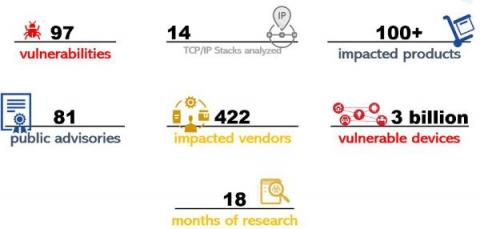
Forescout Research Labs concludes Project Memoria - Lessons Learned after 18 months of vulnerability research

Project Memoria is the largest study on the security of TCP/IP stacks. The idea for this project emerged in May 2020 while collaborating with JSOF on Ripple20. Our researchers understood that the problem with TCP/IP stacks was much deeper and more widespread than initial research had suggested. We hypothesized that similar issues to those identified in Ripple20 could be present in other stacks as well.