Security | Threat Detection | Cyberattacks | DevSecOps | Compliance

The Latest Cybersecurity News & Insights From Around The World


AI Sidebar Spoofing Attack: SquareX Uncovers Malicious Extensions that Impersonate AI Browser Sidebars
SquareX released critical research exposing a new class of attack targeting AI browsers. The AI Sidebar Spoofing attack leverages malicious browser extensions to impersonate trusted AI sidebar interfaces, which is used to trick users into executing dangerous commands that can lead to credential theft, device hijacking, and password exfiltration.

How to set up the Fetch MCP Server in Amazon Kiro
How to set up the Fetch MCP Server in Amazon Kiro.

ED 26-01 | Mitigating F5 Device Vulnerabilities with Network Digital Twin Technology
Learn how Forward Enterprise enables federal agencies to rapidly respond to CISA Emergency Directive 26-01 through comprehensive network visibility, automated inventory, and continuous compliance verification.
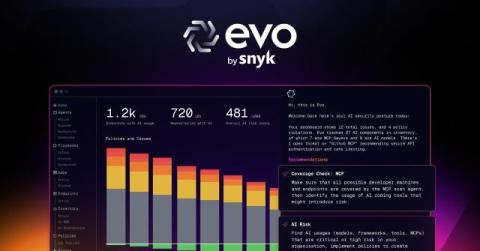
Why We Built Evo - From My Heart
I’ve spent my career building and defending. I’ve seen the beauty of innovation and the brutality of cyber warfare. I’ve sat shoulder-to-shoulder with security engineers and platform teams in the trenches at 3AM responding to state-backed attacks where context and speed meant survival. In those moments, one truth becomes painfully clear: With AI, that gap just became a chasm. Agentic AI didn’t bend the rules of software — it rewrote them. Code now evolves in real time.

From Domain User to SYSTEM: Analyzing the NTLM LDAP Authentication Bypass Vulnerability (CVE-2025-54918)
In September 2025, a critical vulnerability (CVE-2025-54918) was discovered affecting Domain Controllers running LDAP or LDAPS services. This vulnerability allows attackers to elevate privileges from a standard domain user to SYSTEM level access, potentially compromising entire Active Directory environments.

Under The Light: ExPRT.AI
n this episode of Under the Light, we take a closer look at ExPRT.AI—CrowdStrike’s approach to vulnerability prioritization that cuts through the noise. You’ll see how ExPRT.AI moves beyond static scoring models like CVSS, EPSS, and KEV by asking a better question: Will this vulnerability actually be exploited? We’ll break down: The three signals attackers rely on—and so does ExPRT.AI What makes a vulnerability worth their time A real-world story from Intermex that shows what this looks like in action And how all of it comes to life inside the Falcon platform.
CWE vs CVE vs KEV: Untangling the Security Alphabet Soup
Understanding the differences between CWE, CVE, and KEV is critical for modern security and network teams. These acronyms represent the building blocks of threat identification and response, yet many professionals don’t fully grasp how they differ or interact. This blog breaks them down, shows their relationships, and explains how Forward Networks helps correlate them across your environment.

Yet Another SMB-Related CVE
CISA has just added a new CVE regarding SMB, with a very high CVSS rating. CVE-2025-33073 is a high-severity (CVSS 8.8) vulnerability in the Windows SMB client caused by improper access control (CWE-284). An authenticated attacker can exploit it over the network to gain elevated privileges. Microsoft has issued guidance on how it should be patched and CalCom recommend this be done immediately.