Security | Threat Detection | Cyberattacks | DevSecOps | Compliance

What an 'Aha' Moment with an Org Admin Token Taught One DevSecCon Speaker About AI Security

As the summer winds down and conversation around AI Security heats up, the Snyk team is in full swing planning mode for a double-header this October—with the return of DevSecCon’s Flagship conference, focusing this year on Securing the Shift to AI Native, and serving as the founding partner of the inaugural AI Security Summit.

Business logic: The silent future of cyberattacks

Future hacks won’t trigger alarms or leave traces. No security measures will be violated. The systems are functioning normally – but the loss is real. As automated defenses improve, attackers must target what machines can’t: the business processes. By exploiting flaws in workflow logic, hackers can steal data and funds in a way no one expected. Business logic vulnerabilities are now a serious cybersecurity blind spot, and a leading method for breaching even the most secure systems.

Defeating Microsoft EPM in the Race to Admin: a Tale of a LPE vulnerability

Not too long ago I read an interesting blogpost by SpecterOps about Microsoft EPM that got my attention as I was not aware of this Microsoft product/feature. It was interesting to learn that Microsoft expanded into the realm of Endpoint Privilege Management and since this means that there must be some service/driver running with high privileges that elevates low-privileged processes, I thought there could be potential vulnerabilities and bugs.

Next.js Vulnerability: The Critical Flaw of CVE-2025-29927 Explained

A critical vulnerability, identified as CVE-2025-29927, has shaken the Next.js development community. Rated with a severity score of 9.1 (Critical), this flaw allows attackers to completely bypass authorization checks in middleware, potentially granting unauthorized access to sensitive data and protected routes. The issue is a powerful reminder that even a small design flaw in a popular framework can have widespread and dangerous consequences.

Why We Built Nucleus Insights

Today we’re announcing the beginning of the next phase of our journey. We’re launching our Vulnerability Intelligence feed, Nucleus Insights. As we’ve worked with many companies, partners, and clients over the years, this became an obvious next step for Nucleus, and I want to share with you why. Fixing vulnerabilities is expensive. Not just in terms of patching costs or system downtime, but in people, time, and lost focus.


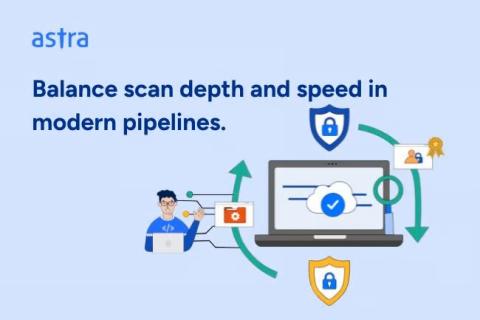
Balancing Scan Depth and Speed in Modern Pipelines

Most teams run on velocity budgets, not risk budgets. While features get sprints, milestones, and release slots, risk, on the other hand, gets hope. When scan depth and speed decisions are made without an explicit budget for risk, the outcome is predictable: throughput is optimized while exposure compounds silently in the background.

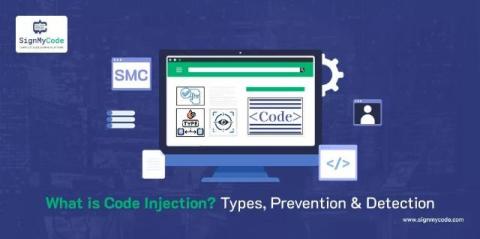
What is Code Injection? Types, Prevention & Detection Strategies

In 2021, a critical vulnerability in a popular Node.js library allowed hackers to carry out code injection and silently compromise thousands of applications, with disastrous effects. It wasn’t a brute-force attack. It wasn’t ransomware. It was some wittily constructed pieces of malevolent code that got through defences and provided attackers with complete carte blanche. Code injection attacks are no longer rare. They’re alarmingly common.