Security | Threat Detection | Cyberattacks | DevSecOps | Compliance

Customers get increased integration with Cloudflare Email Security and Zero Trust through expanded partnership with CrowdStrike

Today, we’re excited to expand our recent Unified Risk Posture announcement with more information on our latest integrations with CrowdStrike. We previously shared that our CrowdStrike Falcon Next-Gen SIEM integration allows for deeper analysis and further investigations by unifying first- and third-party data, native threat intelligence, AI, and workflow automation to allow your security teams to focus on work that matters.

Zero Trust + AI: fewer alerts, guaranteed security

Excessive cybersecurity alerts are not a trivial matter; they pose a real challenge that directly impacts business security strategies. Too many notifications generate stress on IT teams, which are increasingly being reduced in size while facing a heavier burden of tasks. This situation can lead to urgent alerts being overlooked, putting system security at risk.

3 Steps to Embedding Zero Trust Protection for SAP Data Exports

Zero Trust is no longer a nice-to-have - it’s a must-have. According to Cisco, over 86% of enterprise organizations have started rolling out a Zero Trust framework to protect their business-critical information and ensure regulatory compliance, but only 2% have successfully implemented a mature ZT architecture. Zero Trust is no longer a nice-to-have - it’s a must-have.

What is Zero Trust?

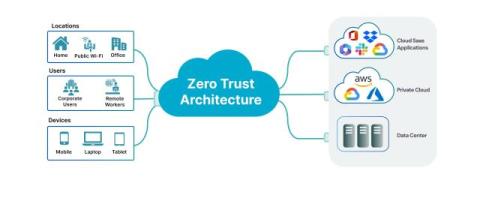
“Never trust; always verify.” That’s the philosophy that drives the Zero Trust model, and it represents a major shift from the previous motto: “Trust but verify.” As threat actors have become more sophisticated, organizations have shifted their security frameworks away from a network-centric model and toward an identity-first model. Zero Trust assumes that every attempt to access an organization’s digital assets is from a threat actor until it can be proven otherwise.

Zero Trust: The Paradox Helping CISOs Enable Their Business

As we reflect on the first half of 2024, it seems to me that two defining features so far have been a litany of significant cyber attacks on companies across every sector, and widespread adoption of AI tools as businesses seek to innovate. At the heart of this storm of cyber threats is the CISO, looking to guide their business safely through potential dangers. Last month, Netskope undertook research examining how CISOs view their role and asking how they’re approaching these challenges.

New NIST Zero Trust Guidance Reinforces Agent Hygiene Value

This week, the National Institute for Standards and Technology (NIST) released “Implementing a Zero Trust Architecture (NIST SP 1800-35)” for public comment. The guide is written by NIST’s National Cybersecurity Center of Excellence (NCCoE) in collaboration with 24 cybersecurity companies. Now in its fourth draft, NCCoE has opened up comments for this Zero Trust Architecture (ZTA) guide through Sept. 30, 2024, as part of a 60-day review cycle.

Wiz and Netskope: Making IaaS Zero Trust Magic

Netskope and Wiz help organizations simplify and automate policy management across complex cloud environments. This partnership highlights the seamless integration between Wiz sharing security risk and threat insights to enable Netskope to modify existing policies or craft new ones automatically. Below, we present two of the primary use cases that customers leverage with our joint integration.