Security | Threat Detection | Cyberattacks | DevSecOps | Compliance

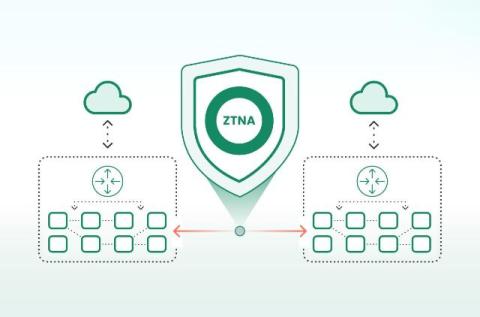
Zero Trust for the East/West Battleground

Most major breaches do not spiral out of control because attackers get in. They spiral because attackers are free to move once they are inside. After gaining an initial foothold through compromised credentials, a misconfigured cloud workload, a remote device, or a third-party connection, sophisticated attackers pivot. They scan the network, escalate privileges, and move laterally across the LAN and datacenter until they reach critical systems.

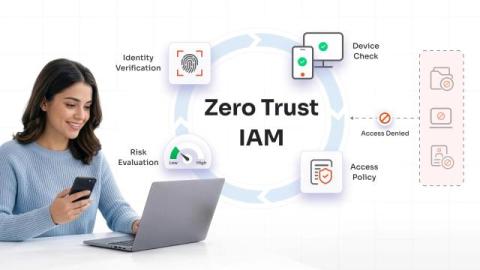
Zero Trust IAM: Why Modern IAM is the Foundation of the Zero Trust Framework

For years, cybersecurity relied on a secure network perimeter, where users were trusted once inside. This approach was effective when everything was contained in a controlled environment, but it no longer works today. Modern organizations operate across cloud platforms, SaaS, mobile devices, and distributed teams. Employees and partners connect from various locations while APIs exchange data. As a result, the traditional network boundary no longer exists.

Top 5 Zero Trust Vendors in Cybersecurity in the United States

As cyber threats grow and become more threatening, businesses must shift to stronger, more proactive strategies to protect their data and networks. Zero Trust Security is one such approach gaining traction. Based on the principle of "never trust, always verify," Zero Trust continuously authenticates and authorizes every user and device before granting access to sensitive systems or data, regardless of whether they are inside or outside the network.

Zero Trust Access. Simplified.

Secure access is broken. Hybrid work, unmanaged devices, and cloud apps have outgrown VPNs, leaving gaps in security and increasing operational complexity. This video shows how Cato Universal ZTNA replaces fragmented access with a single, consistent policy across all users, devices, and applications while improving performance and control. You’ll see how continuous, risk-based access and application-level connectivity can reduce exposure while simplifying operations.

Zero Trust: Execution is now the standard

In January 2026, the National Security Agency released its first Zero Trust Implementation Guidelines (ZIGs). Their aim was to do something prior guidance intentionally avoided: move Zero Trust from architectural alignment to operational execution. That timing matters. Zero Trust has been a framework for years and rightly so. Like a quality standard, it is designed to evolve. The same tools, techniques, and skills shaping modern cyber defense are available to both friend and foe.

Ransomware Protection Best Practices: Leveraging MDR and EDR in the Zero Trust Era

Ransomware attacks are on the rise. Their quiet nature is one of the main reasons why many organizations are unable to detect them. Ransomware attacks begin with something small, maybe a login at an unusual hour or a script running where it normally should not. There could be many more instances, which may not appear suspicious at first. By the time encryption begins, attackers have already moved deep into the environment.

SMB Cybersecurity Spending Rises: Zero Trust & Secure Access Now Essential

Cybersecurity is no longer just for large enterprises. Small and medium-sized businesses (SMBs) are boosting security investments as cyber risks increase and digital operations expand. According to Omdia, SMBs account for more than 99% of organizations worldwide. In 2025, these businesses increased their cybersecurity spending by 11%, reaching $64.3 billion. This surge reflects an important shift. SMBs are no longer treating cybersecurity as a reactive IT expense.

Recovery-Ready: Building Business Resilience Through Continuity-Focused Cyber Defenses

Most businesses do not think about cybersecurity until something goes wrong. A system suddenly goes offline, files become inaccessible, or suspicious activity appears in the network. These moments are disruptive, but they are also revealing. They show how prepared, or unprepared, a business really is when operations are put under pressure.

What security leaders need to know about zero trust identity management in 2026

The evolution of cybersecurity challenges and the rapid pace of digital transformation have led security leaders to focus increasingly on robust and adaptive security frameworks. Among them, zero-trust identity management has emerged as a cornerstone of modern security strategies.