Security | Threat Detection | Cyberattacks | DevSecOps | Compliance

Agentic Era: The Myths and Realities of It All

After four sessions covering the technical realities, business imperatives, and security challenges of agentic AI, Salt Security’s Co-Founder and CEO Roey Eliyahu, and Salt's CMO Michael Callahan, come together for an unfiltered conversation about where the industry actually stands and where it's headed. The gap between AI ambition and operational readiness has never been wider.

The Agentic Era is Here: Announcing the 4th Edition of AI & API Security For Dummies

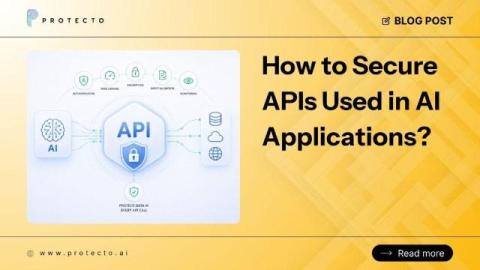
If you look at the headlines, the story is about Artificial Intelligence. But if you look at the architecture, the story is about APIs. The reality of modern tech is simple: You can’t have AI security without API security. As we move rapidly from simple chatbots to autonomous agents, the way we secure our infrastructure must evolve. That is why we are thrilled to announce the release of the 4th Edition of AI & API Security For Dummies, Salt Security Special Edition.

Cybersecurity Predictions for 2026: Human Risk, AI Data Leaks, and the Next Big Breach

Looking back at 2025, two mega-trends from the past have continued: First, data breaches remained a constant and continued to trend upward; and second, there was once again a headline disaster no one anticipated. The first point needs no elaboration; data breaches are like air pollution—an accepted nuisance that only occasionally becomes so severe that we wonder why we live like this. For the second point, I gesture toward the major incidents of recent years. MoveIt. Crowdstrike. Snowflake.

2026 Cybersecurity Predictions by Teleport CEO Ev Kontsevoy

2025 was a turning point for identity security. Many professionals realized that traditional human and machine-focused identity solutions just don’t work for AI. AI is non-deterministic like a human, yet it’s still software. This creates an entirely new identity category. Traditional IAM tools would treat AI identities as yet another separate type, creating new silos.

Demo: Manage security posture of GenAI apps

See how Cloudflare One helps you manage the security posture of GenAI tools like ChatGPT, Claude, and Gemini. This demo highlights: API integrations: Available for ChatGPT, Gemini, and Claude, and most popular SaaS apps 0:18 Posture findings: Scan for misconfigurations, unauthorized activity, and other security issues 0:50 Shadow AI discovery: Find what third-party AI apps access your SaaS tools 1:15.

Demo: Prevent data exposure in AI

See how Cloudflare One helps protect sensitive data when users interact with generative AI apps. This demo highlights secure access service edge (SASE) capabilities including: Data loss prevention (DLP) detections for sensitive content (e.g., PII, source code, financials) 0:22 Detections for data at rest in AI tools like ChatGPT 1:00 Guardrails for user prompts based on intent / topic to block jailbreak attempts, code abuse, PII requests, and other risky behavior 2:12.

DeepChat AI agent XSS-to-RCE via Mermaid and Electron IPC

In December 2025, a critical remote code execution vulnerability was disclosed in DeepChat, an open-source desktop AI agent platform built using Electron. The issue, tracked as CVE-2025-67744, affects all DeepChat versions prior to 0.5.3 and carries a CVSS score of 9.6. The vulnerability arises from the interaction between two separate weaknesses. The first allows attacker-controlled JavaScript execution through unsafe rendering of Mermaid diagrams.

AIOps in the Cato SASE Platform: Using Predictive AI Networking to Shift from Reactive to Proactive IT

It was a quiet Monday morning until John, head of IT, opened his laptop and saw 424 new support tickets. Users across the office were reporting issues like “apps won’t load” and “internet not working.” After hours of investigation that stretched into the next day, the team traced the problem to a branch router overwhelmed by malformed DNS queries from a misbehaving IoT device.