
Security | Threat Detection | Cyberattacks | DevSecOps | Compliance

Why AI-Native Endpoint DLP Is The Foundation of Modern Data Security

For a long time, data loss prevention (DLP) lived in the margins of security programs. It was something teams deployed to satisfy a requirement or reduce obvious risk. A handful of policies, some visibility into network traffic, maybe a scan of cloud storage. That was usually enough. That model reflected how work used to happen. Data moved more slowly, lived in fewer places, and followed more predictable paths. That is no longer true.

Reach Recognized in Gartner Emerging Tech Report on Domain-Specific Language Models for SecOps

In its January 2026 report, Emerging Tech: Tech Innovators in Domain-Specific Language Models for SecOps, Gartner examines how domain-specific language models (DSLMs) are reshaping security operations. The report explains that DSLMs are designed to address the limitations of general-purpose language models by focusing on a particular task or use case – in this case, cybersecurity.

Multi-Agent AI Systems: Beyond the Basics

Production deployments. That’s where multi-agent AI systems live now, not research labs. Salesforce, Microsoft, and Cognition Labs are all running agent pipelines that replaced what used to take entire ops teams. Most businesses still don’t fully understand what they’ve switched on. A multi-agent AI setup isn’t just one model doing more things.

Beyond the Hype: Navigating the Security Risks and Safeguards of Generative AI Video

The rapid evolution of generative AI video models, such as Seedance 2.0, Kling 3.0 and OpenAI's Sora, has unlocked unprecedented creative potential. However, for cybersecurity professionals, these advancements represent a significant expansion of the corporate attack surface. In an era where "seeing is no longer believing," the integration of synthetic media into the enterprise workflow demands a rigorous security framework. This article explores the dual nature of AI video: the sophisticated threats it enables and how modern, enterprise-grade platforms are architecting defenses to mitigate these risks.

AI Deepfakes & Laptop Farms: Inside the 2026 Cloudflare Threat Report

In this episode of This Week in NET, host João Tomé is joined by Cloudflare threat intelligence experts Brian Carter and Chris Pacey to break down the 2026 Cloudflare Threat Report and what it reveals about today’s cyber threat landscape. We discuss how threat intelligence helps organizations prioritize risks, how attackers are increasingly leveraging automation and AI tools, and why botnets, supply-chain attacks, and credential-theft campaigns continue to evolve.

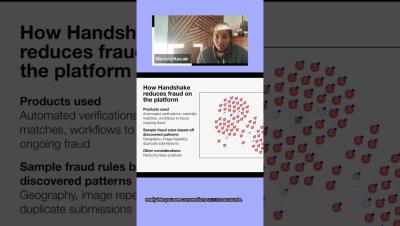
AI Impact Summit 2026 Highlights | FinTech, AI & Data Security Insights #ai

AI Impact Summit 2026 Highlights | AI, FinTech & Data Security Insights from Delhi This video covers our 5-day experience at AI Impact Summit 2026 in New Delhi, one of India's leading technology events focused on Artificial Intelligence, FinTech, Data Security, and Compliance. During the summit, we connected with industry leaders, CISOs, FinTech professionals, and AI innovators, discussing the latest developments in data protection, AI governance, cybersecurity, and enterprise AI adoption.

AI Agent Security Framework for Cloud Environments

Your security team has done the homework. You’ve built a risk taxonomy covering agent escape, prompt injection, tool misuse, and data exfiltration. You’ve mapped those threats against your agent architecture’s seven layers. You’ve classified your agents by autonomy level — separating read-only chatbots from fully autonomous workflow agents that can book meetings, modify databases, and invoke other agents. The risk assessment is thorough.

What Is AI Agent Sandboxing? Kubernetes-Native Enforcement Explained

You’re in a Slack thread at 9 AM on a Tuesday. A developer is asking why their LangChain agent can’t reach an external API anymore. You wrote the NetworkPolicy that blocked it. But you also can’t explain why you wrote that specific rule—because you wrote it based on what you guessed the agent would do, not what it actually does. You don’t have behavioral data. You don’t have an observation period.

Access Your OpenClaw Web UI from Anywhere with Teleport

OpenClaw’s web UI gives you full control over your personal AI agent, but exposing it publicly creates significant risk. In this video, I show how to securely access the OpenClaw web interface from anywhere using Teleport, without opening inbound ports or relying on public instances. You’ll see how to put the OpenClaw UI behind identity-based access, approve devices, and keep full admin control while staying locked down.